The Most Effective Solution for Tongue Tie Removal: Procedure & Risks

When Is Tongue Tie Removal the Right Choice?
Tongue tie removal is a minor surgical procedure that releases a tight band of tissue under the tongue, restoring normal movement. Here is a quick overview:
Question | Quick Answer |
|---|---|
What is tongue tie? | A short or tight frenulum (tissue band) that limits tongue movement |
Who needs removal? | Infants with feeding issues, children with speech problems, or adults with mechanical limitations |
Main procedures | Frenotomy (quick snip) or frenuloplasty (surgical release for complex cases) |
Is it painful? | Minimal discomfort; infants under 3 months typically need no anesthesia |
How long does it take? | As little as 1 minute for a scissor frenotomy; laser procedures take 30-60 seconds |
Does it work? | Yes — studies show a significant improvement in breastfeeding outcomes after frenotomy |
If you have ever watched a baby struggle to latch during feeding — or seen a child unable to lick an ice cream cone — you have seen the real impact of tongue tie firsthand. The condition, medically known as ankyloglossia, affects an estimated 4 to 11% of newborns. It occurs when the lingual frenulum (the small strip of tissue connecting the underside of the tongue to the floor of the mouth) is too short, thick, or tight, limiting the tongue's range of motion.
The effects go beyond infancy. Untreated tongue tie can contribute to speech difficulties, localized tooth decay, and even social challenges in older children and adults.
Treatment is not always necessary — mild cases sometimes resolve on their own. But when tongue tie causes real functional problems, tongue tie removal is a safe, well-studied solution with a strong track record.
I'm Dr. John Hejazene, owner of Bradenton Implants and Smile Center, with over 8 years of experience performing advanced dental procedures including tongue tie removal using modern laser technology. In the sections below, I'll walk you through everything you need to know — from diagnosis to recovery — so you can make a confident, informed decision for yourself or your child.
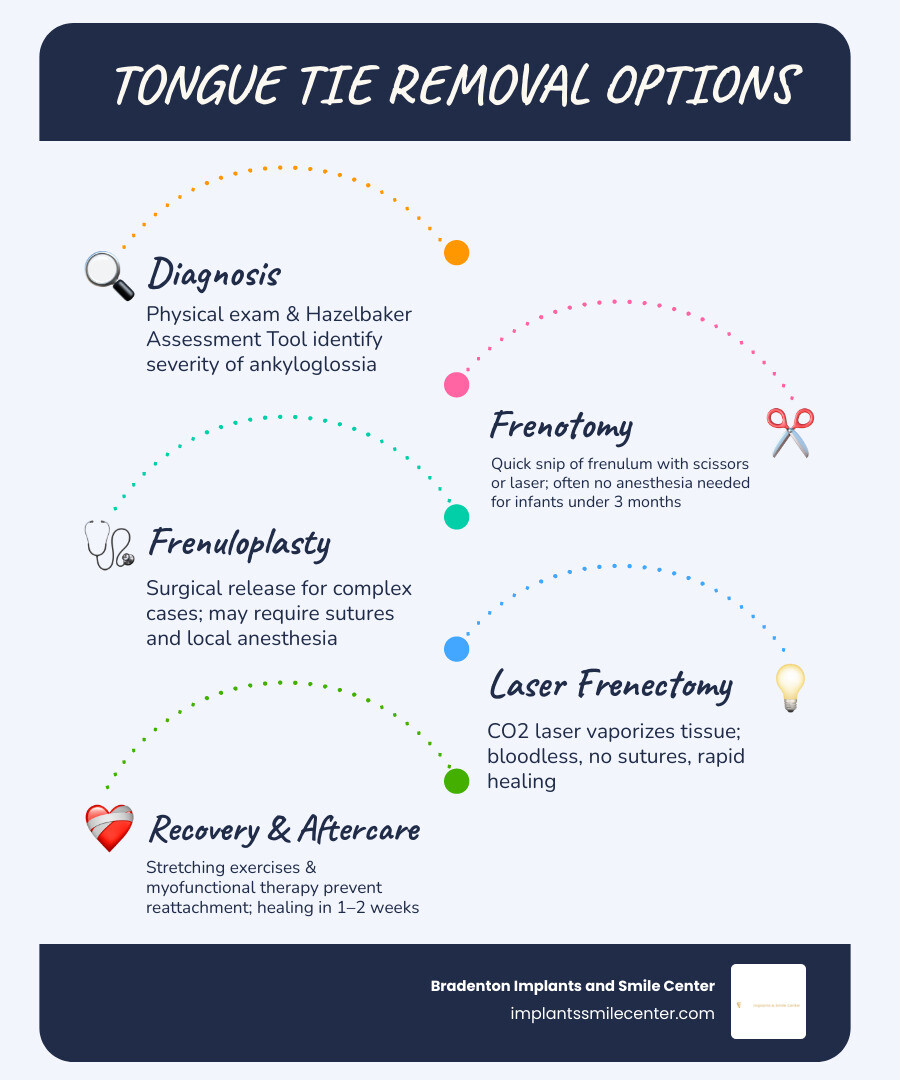
What is Ankyloglossia and How is it Diagnosed?
Ankyloglossia is a congenital condition, meaning it is present right from birth. It occurs during embryonic development when the lingual frenulum fails to properly recede, leaving a tight, thick, or unusually short anchor under the tongue. Statistically, this condition is more common in boys than in girls, and it frequently runs in families.
When evaluating a patient, medical and dental professionals do not look solely at the physical appearance of the tongue. Instead, we perform a thorough physical exam that focuses heavily on function. To standardize this process, many specialists use the Hazelbaker Assessment Tool for Lingual Frenulum Function (HATLFF). This scoring system rates both the anatomical structure and the active mobility of the tongue. If the functional score is perfect, surgical intervention is generally discouraged, even if the tissue looks slightly tight. You can read more about this in the Scientific research on ankyloglossia diagnosis.
Symptoms Across Different Stages of Life
The signs of a restrictive frenulum change dramatically as a person grows:
Infants: The most immediate challenge is a poor latch during breastfeeding. This often leads to a cycle of frustration: the baby makes clicking sounds while trying to nurse, frequently loses suction, and struggles to get enough milk. For the mother, this can cause extreme physical pain, cracked or bleeding nipples, and poor breast drainage. If the infant cannot feed efficiently, weight gain slows down. In fact, clinical data shows that infants who undergo a corrective procedure before 8 days of age gain significantly more weight than those treated later.
Older Children: As children grow, a tongue tie can begin to impact speech articulation. While it does not cause a speech delay, it makes it incredibly difficult to pronounce certain consonant sounds that require the tongue to touch the roof of the mouth (such as d, l, t, th, and z). Additionally, because the tongue cannot move freely to sweep food debris away from the teeth and gums, these children have a higher risk of localized tooth decay. They may also experience physical cuts under the tongue when the tight tissue gets pinched between their lower front teeth.
Adults and Teens: Beyond speech, older individuals often face mechanical and social limitations. Simple daily activities like licking an ice cream cone, kissing, or playing a wind instrument can become frustratingly difficult.
Because of these shifting challenges, parents and adult patients often look for ways to manage the condition. For mild cases, there are reliable non-surgical pathways. You can explore these exercises and alternative therapies in our guide on More info about non-surgical options.
Surgical Options: Frenotomy vs. Frenuloplasty
When non-surgical adjustments are not enough, we look to surgical tissue release. The two main surgical procedures used to treat ankyloglossia are a frenotomy and a frenuloplasty. The right choice depends on the patient's age, the thickness of the tissue, and the overall clinical severity.
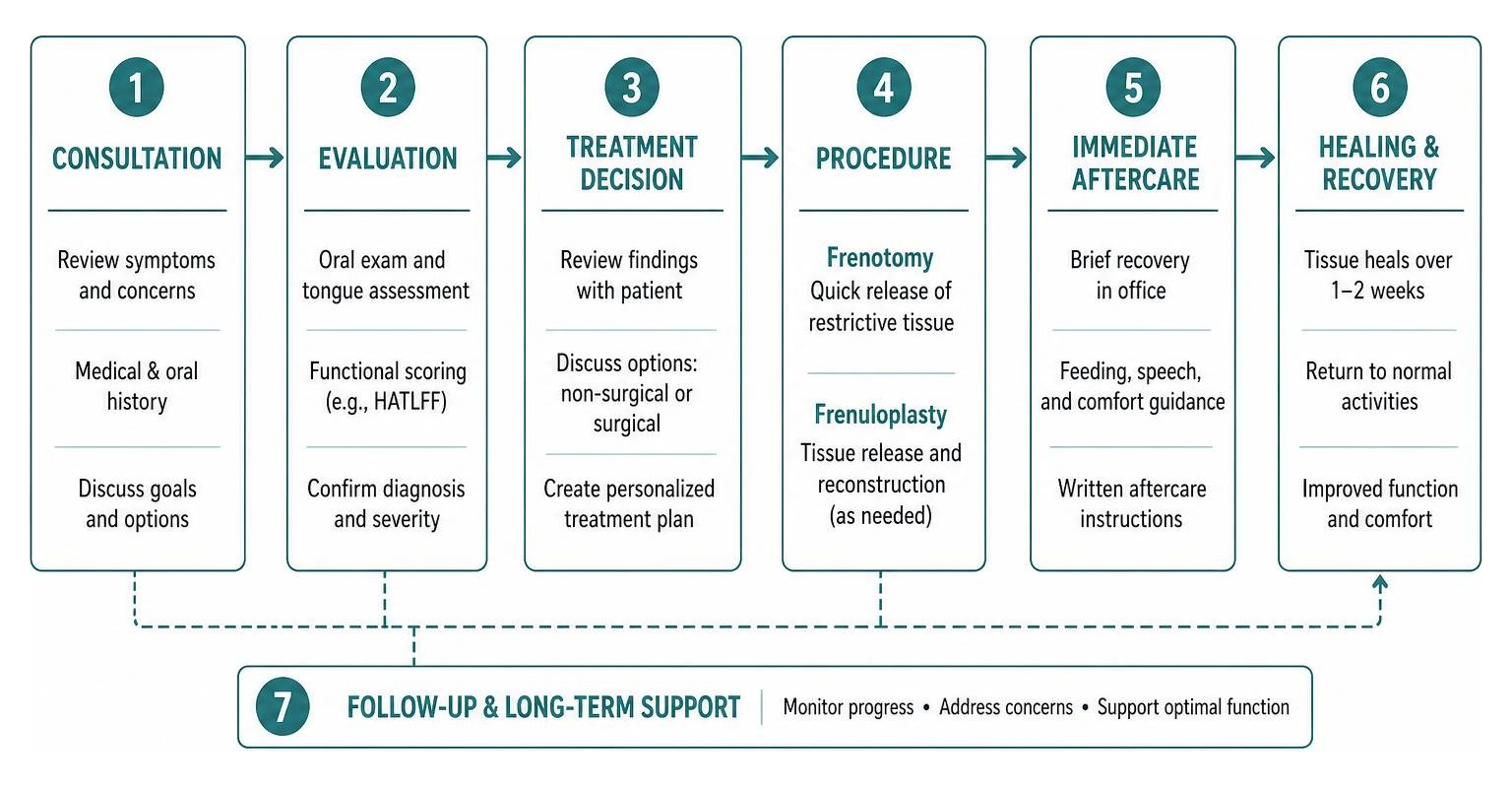
A frenotomy (sometimes referred to interchangeably with a frenectomy) is a quick, straightforward procedure. It involves making a simple incision through the restrictive tissue band to free the tongue. For young infants (typically under 3 months of age), this is easily performed in an outpatient clinic or office setting. Because the lingual frenulum has very few nerve endings and blood vessels at this stage, the procedure is so brief—often taking under a minute—that general anesthesia is not required, and local numbing is rarely even necessary.
A frenuloplasty, on the other hand, is a more involved surgical reconstruction. It is recommended when the frenulum is exceptionally thick, or when a simple frenotomy has failed and the tissue has reattached. This procedure is typically performed under general anesthesia for older children and adults to ensure they remain completely still. The surgeon carefully releases the tissue and repositions it using a specialized design (such as a Z-plasty or a 4-flap technique) to maximize tongue length and mobility, closing the site with self-absorbing sutures.
To help you visualize the differences, here is a direct comparison of the two approaches:
Feature | Frenotomy / Frenectomy | Frenuloplasty |
|---|---|---|
Complexity | Simple, quick release | Advanced surgical reconstruction |
Typical Age | Infants under 3 to 6 months | Older children, teens, and adults |
Anesthesia | None or local numbing | General anesthesia or deep sedation |
Sutures Required | No | Yes (usually self-absorbing) |
Procedure Time | 30 seconds to 1 minute | 15 to 30 minutes |
Best For | Thin, membrane-like tissue | Thick, muscular, or complex ties |
For detailed clinical guidelines on how these minor surgeries are performed, you can review the Clinical guidelines on frenotomy. If you would like to learn more about the specific surgical treatments we offer at our Bradenton practice, you can read More info about surgical release services.
Laser Frenectomy: A Modern Approach to Tongue Tie Removal
In modern dentistry, we have moved toward using advanced dental lasers to perform tongue tie removal. A laser frenectomy utilizes a highly focused CO2 laser to gently vaporize the restrictive tissue instead of cutting it with traditional cold-steel scissors or scalpels.
The biophysics behind this technology are fascinating. The laser light is absorbed by the water in the soft tissue, allowing for incredibly precise, layer-by-layer vaporization. As the laser releases the tissue, it simultaneously cauterizes the blood vessels and seals the nerve endings. This results in a virtually bloodless procedure, significantly less post-operative swelling, and a much lower risk of infection.
Because the laser sterilizes the surgical site instantly and eliminates the need for physical stitches, the healing process is remarkably rapid. Patients often report feeling immediate relief and can resume normal eating and speaking almost right away.
The Benefits and Risks of Tongue Tie Removal
Deciding to move forward with tongue tie removal involves weighing the clear, life-changing benefits against the minor, manageable risks of the procedure.
The Lifelong Benefits
For infants and mothers struggling with breastfeeding, the positive changes are almost immediate. Clinical studies show that a successful frenotomy leads to a significant improvement on the Hazelbaker Assessment Tool scale. This translates directly to a deeper, more comfortable latch, a significant reduction in maternal pain, and more efficient milk transfer.
As the baby feeds more effectively, their weight gain stabilizes, reducing stress for the entire family. For older children and adults, freeing the tongue improves speech clarity, makes it easier to keep the teeth clean, and restores the simple mechanical freedom of the mouth.
Understanding the Risks
While a tongue tie release is exceptionally safe, no procedure is entirely without risk. Potential complications are rare but can include:
Minor Bleeding: Because the area under the tongue is rich in blood vessels, a drop or two of blood is normal, especially with traditional scissor procedures. This is easily controlled with light pressure or immediate nursing.
Infection: The mouth heals incredibly fast, but keeping the area clean is essential to prevent localized infection.
Salivary Duct or Nerve Injury: The salivary glands sit close to the base of the frenulum. Working with an experienced professional minimizes the risk of irritating these delicate structures.
Oral Aversion: Rarely, an infant may temporarily resist feeding due to mild post-procedure soreness, but this typically resolves within a day.
To dive deeper into the clinical data and long-term success rates of this treatment, you can read the Evidence-based outcomes of tongue tie release.
Recovery, Aftercare, and Preventing Reattachment
The tissue inside the mouth heals faster than almost any other part of the body. Within 24 to 48 hours after the procedure, a small, diamond-shaped white or yellowish patch will form under the tongue. This is not a sign of infection; it is a normal "wet scab" showing that the tissue is healing beautifully from the inside out.
The biggest challenge during recovery is preventing the raw edges of the wound from sticking together and healing back into their original, restricted position. To prevent tissue reattachment, we recommend a consistent routine of active wound management. This involves performing gentle, clean-fingered stretching exercises under the tongue several times a day for a few weeks post-procedure. These stretches keep the healing tissue elongated and flexible.
Additionally, we highly recommend a multidisciplinary approach to recovery. Working alongside a certified lactation consultant can help infants learn how to use their newly freed tongue to latch correctly. For older children and adults, collaborating with a speech-language pathologist or a myofunctional therapist ensures they rebuild proper tongue strength and swallowing habits.
What to Expect After Tongue Tie Removal
Immediately after the procedure, we encourage mothers to breastfeed their infants. Nursing provides instant physical comfort, and the natural action of swallowing helps clean the wound and encourages immediate tongue mobility.
For pain management, young infants rarely need anything more than skin-to-skin contact, a calm environment, and immediate feeding. For older children and adults, mild over-the-counter pain relievers or a cool treat (like a fruit popsicle) can easily soothe any temporary soreness. Most patients are back to their normal routines within 24 to 48 hours.
Frequently Asked Questions about Ankyloglossia
Can a tongue tie resolve on its own without surgery?
Yes, in mild cases, it is entirely possible. As a child’s mouth grows and develops, the lingual frenulum can naturally stretch, thin out, and loosen on its own. If a tongue tie is not causing any issues with feeding, speech, or dental health, a "wait-and-see" approach is often the most sensible path.
Does tongue tie cause speech disorders in children?
Scientific research does not show a direct link between tongue tie and overall speech delays or language disorders. However, a tight frenulum can cause articulation difficulties, making it hard to pronounce specific consonant sounds clearly. If a child continues to struggle with speech after their tongue tie is released, they will benefit greatly from targeted speech-language therapy.
Can a tongue tie grow back after it is released?
The frenulum itself does not "grow back," but the healing tissue can scar or reattach if the raw edges of the surgical wound are allowed to sit flat against each other. This is why consistent, gentle post-operative stretching exercises are so important to ensure a successful, permanent release.
Conclusion
Whether you are helping an infant navigate their first weeks of life or looking to improve oral comfort and function as an adult, tongue tie removal is a safe, highly effective, and life-changing solution.
You do not have to travel far to find advanced, compassionate treatment. If you are looking for trusted tongue-tie release care in the Bradenton, FL area, our team is right here in your neighborhood to provide comprehensive dental services and specialized care.
At Bradenton Implants & Smile Center, we are dedicated to providing personalized, high-tech care for patients of all ages. If you have questions about tongue tie or want to discuss your options, reach out to our team directly.
We are here to help you smile, speak, and live with complete confidence. Schedule a consultation at Bradenton Implants & Smile Center today!