Mini Dental Implants Cost Breakdown: Single Tooth, Full Arch, and Insurance
Mini Dental Implants Cost: What to Budget
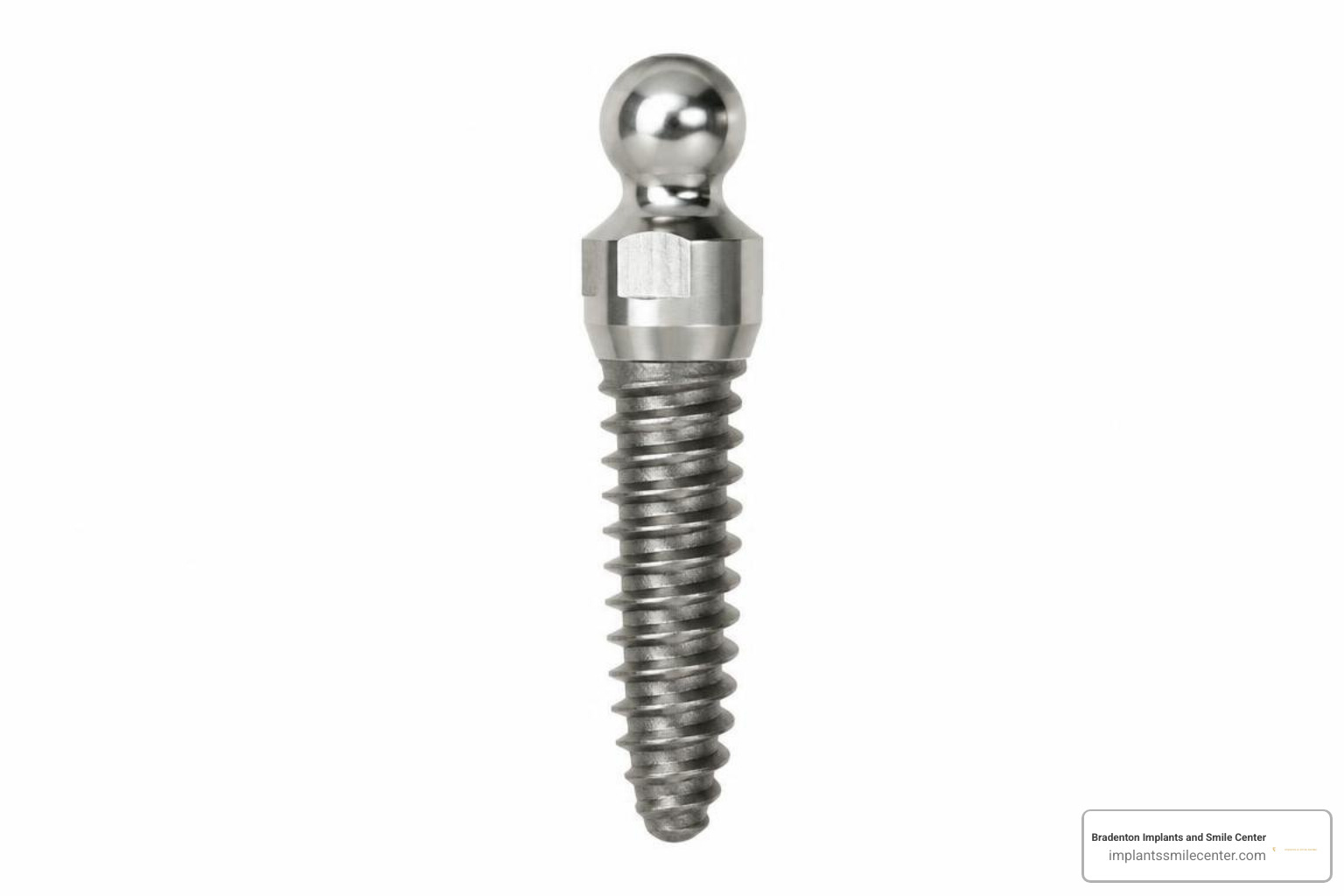
In the U.S., mini dental implants cost about $500 to $1,500 per implant, with a reported average of $860. That price may not include the crown or denture it supports. A single mini implant with a crown can cost $1,200 to $3,500, while a lower denture supported by several mini implants averages about $4,394. By comparison, a traditional implant with a replacement tooth often costs $3,000 to $5,000.
Your final bill depends on how many implants you need, the type of replacement teeth, imaging, and whether you need extractions or other care. Insurance coverage varies, so ask for an itemized treatment plan and a benefits check before comparing quotes.
I’m Dr. John Hegazin, owner of Bradenton Implants & Smile Center. With more than eight years of dental experience, including implant and restorative care, I’ll help you understand what drives mini dental implants cost and which questions to ask about your treatment plan.
What Are Mini Dental Implants and How Do They Work?
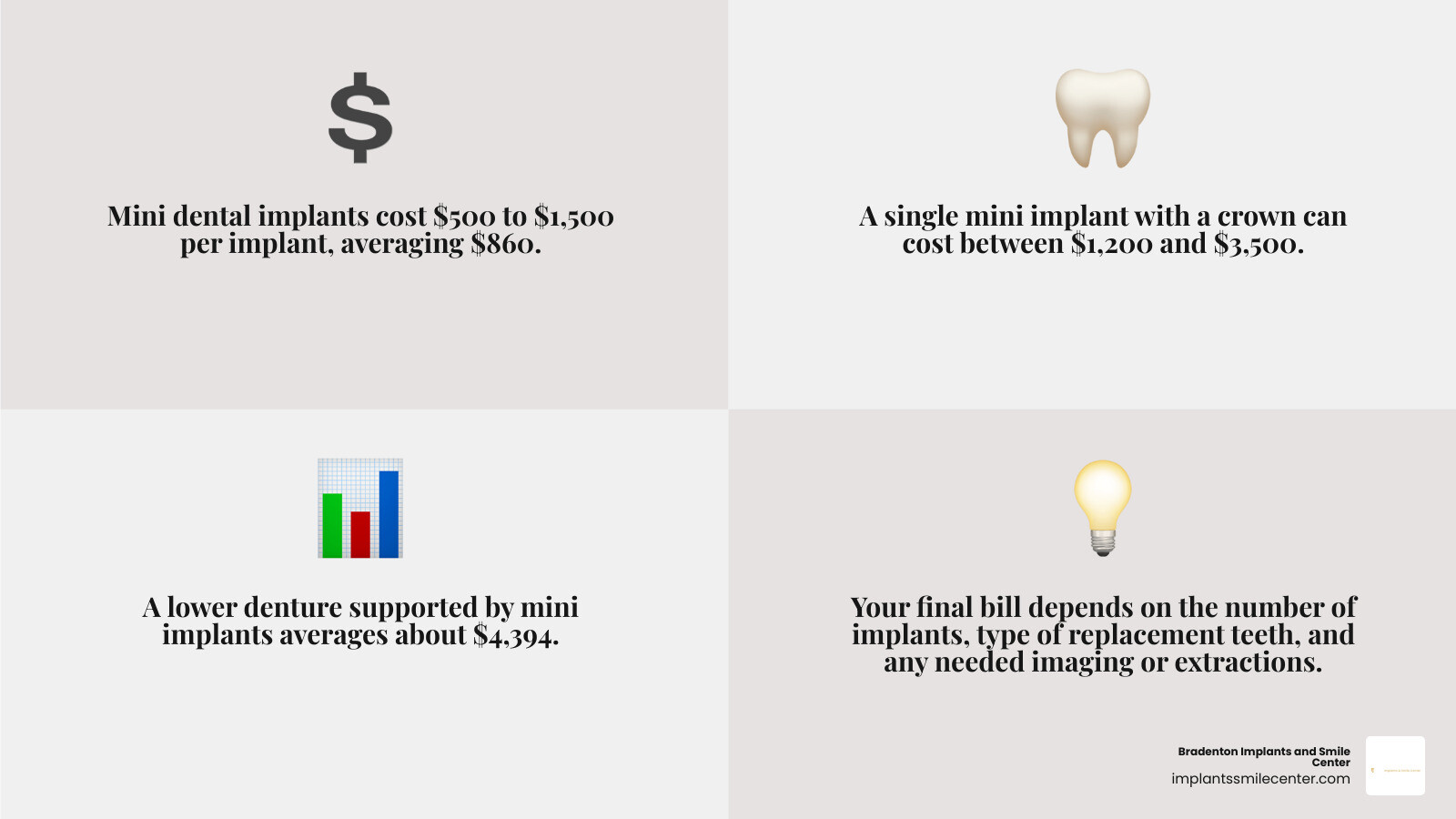
Mini dental implants (often called MDIs) are narrower versions of traditional dental implants designed to replace missing teeth and anchor dental prosthetics. While traditional implants have a diameter between 3.5 and 6 millimeters, mini dental implants measure less than 3 millimeters across—typically ranging between 1.8 mm and 3.0 mm.
These slender fixtures are forged from medical-grade Grade 5 titanium alloy (Ti-6Al-4V), an exceptionally strong material biocompatible with natural bone. Unlike traditional options that use a separate post and abutment, a mini implant features a one-piece solid design. The top of the post incorporates a small, ball-shaped connector that snaps directly into the base of a replacement tooth or overdenture retaining ring.
Because of this streamlined shape, we can usually place them using a flapless surgical technique. Instead of cutting open the gum tissue and peeling it back, we make a tiny pilot hole right through the tissue to insert the post. This approach leads to pain-free implant procedures that cause minimal bleeding, require no sutures, and involve a dramatically simpler recovery.
Mini Implants vs. Traditional Dental Implants
Understanding the differences between narrow-body and standard-diameter posts helps clarify why treatment costs and surgical timelines differ so significantly. In our practice, we evaluate each patient's jaw structure to determine which approach offers the best balance of stability and value.
Feature | Mini Dental Implants (MDIs) | Traditional Dental Implants |
|---|---|---|
Implant Diameter | 1.8 mm to 3.0 mm | 3.5 mm to 6.0 mm |
Component Design | Single solid piece (integrated ball/abutment) | Two or three pieces (separate post, abutment, crown) |
Surgical Invasiveness | Minimally invasive (often flapless, no stitches) | Surgical incision, flap creation, often requires sutures |
Bone Density Need | Minimal (often avoids bone grafting) | Substantial (frequently requires ridge grafting or sinus lifts) |
Procedure & Healing | Single-visit placement; heals in 2–4 weeks | Multi-stage surgery; heals in 3–6 months |
Average Cost per Post | $500 – $1,500 (National Avg: $860) | $1,500 – $3,000 (Fixture only) |
Full Restoration Cost | $1,200 – $3,500 (Single tooth with crown) | $3,000 – $5,000+ (Single tooth with crown) |
While standard implants offer maximum surface area for high-load areas like molars, independent clinical evaluation of mini dental implants demonstrates high success rates for stabilizing loose dentures and restoring front teeth. They represent an excellent path toward affordable dental implants when extensive surgical reconstruction is unnecessary.
Ideal Candidates and Candidacy Factors
Mini dental implants are an excellent option for patients who want a stable smile without complex bone grafting surgery. You might be a great candidate for mini implants if you have:
Reduced Jawbone Density: Natural bone loss often follows years of missing teeth. Mini implants can anchor securely into thin alveolar ridges where wider posts cannot fit.
Denture Instability: If you struggle with a lower denture that floats, clicks, or rubs while eating, mini posts provide immediate retention.
Advanced Age: Many older adults want to avoid long, invasive oral surgeries. We frequently recommend these affordable implants for seniors who want fast, predictable results.
Narrow Gaps: When replacing small lateral incisors or teeth in tight spaces, standard implants can be too wide to place safely without touching adjacent roots.
However, mini implants are not ideal for everyone. Severe chronic bruxism (teeth grinding) or heavy biting forces on posterior molars can place excess mechanical stress on narrow titanium posts. During your exam, we evaluate your bite mechanics and overall health to ensure your investment lasts for years to come.
Comprehensive Mini Dental Implants Cost Breakdown by Treatment Type
When planning your budget, it helps to distinguish between the cost of the individual titanium fixture and the complete restoration package. A single post averages $860 in the United States, but your total price depends on whether you are replacing one tooth, several teeth, or an entire dental arch. Exploring the cost of dental implants in 2026 gives you a reliable framework for comparing treatment options.
Single Tooth Replacement and Mini Dental Implants Cost
For an individual missing tooth—especially in the front or premolar area—the cost of a mini implant fixture ranges from $500 to $1,500.
When you add the custom-shaded porcelain or zirconia crown and the specialized connector, the total price for single tooth restoration usually falls between $1,200 and $3,500. By comparison, restoring a single tooth with a traditional implant and custom abutment often runs $3,000 to $5,000 or more.
Full Arch Overdentures and Mini Dental Implants Cost for Denture Wearers
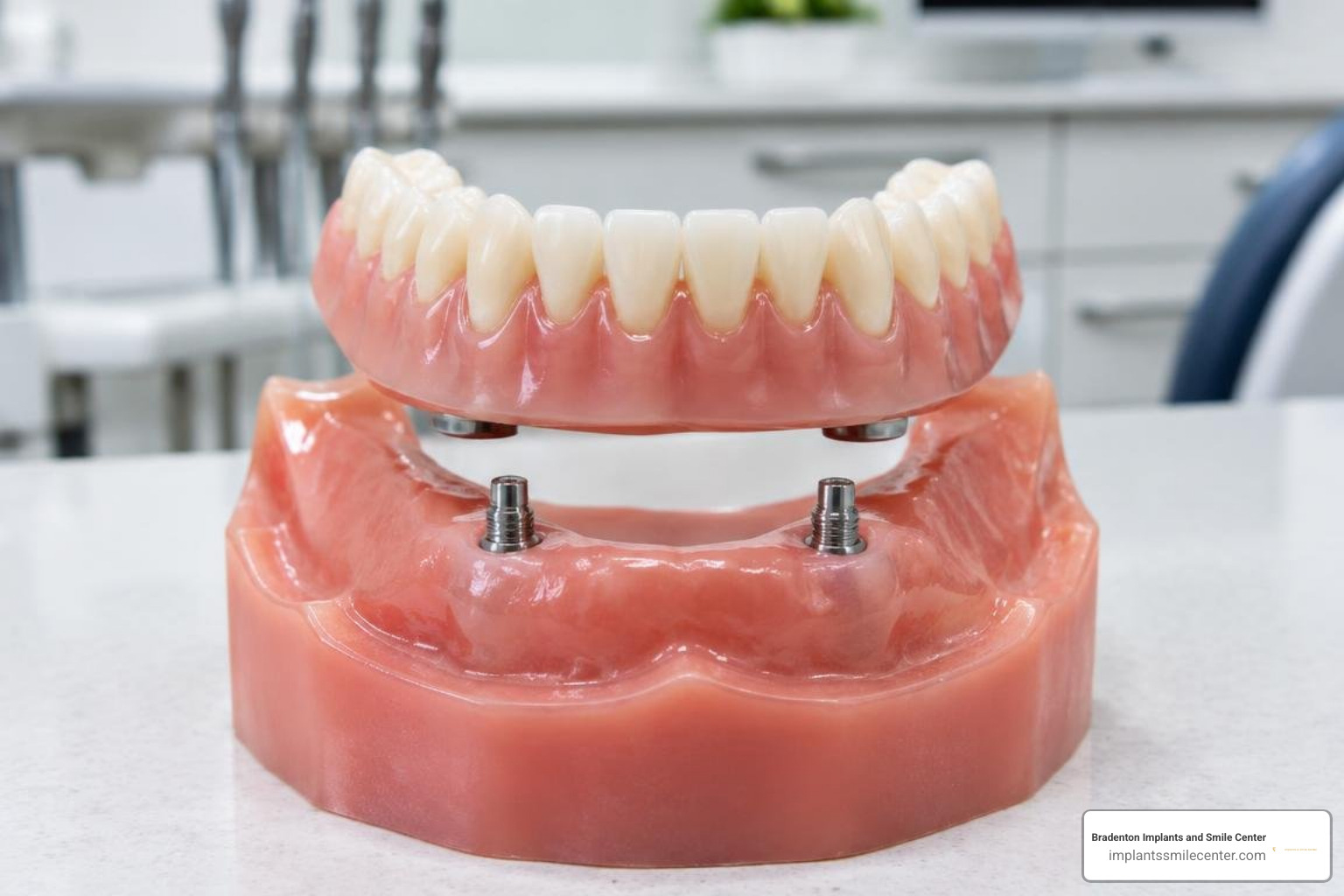
One of the most popular uses for mini implants is locking a loose lower denture into place. Because the lower jawbone is naturally dense, four to six mini implants can transform a floating denture into a secure snap-in system.
National Average Cost: $4,394
Typical Price Range: $3,498 to $8,386
This complete price typically includes placing 4 to 6 mini titanium fixtures and retrofitting your existing denture with specialized rubber O-ring housings (or fabricating a brand-new overdenture). When reviewing overall snap-on dentures cost, mini implant systems are often thousands of dollars less than traditional full-arch bar or multi-unit fixed options.
Key Cost Factors: Diagnostics, Materials, and Bone Density
Your personalized estimate depends on several clinical factors:
3D Diagnostic Imaging: High-resolution CBCT scans map your bone volume, nerve pathways, and tissue thickness.
Preparatory Extractions: Removing compromised or infected natural teeth before implant placement adds modest fees to the overall treatment plan.
Number of Fixtures: While single teeth need one post, full-arch retention requires four to six implants for proper stability and weight distribution.
Bone Quality and Supplemental Care: Although mini posts often eliminate the need for bone grafting for implants, moderate localized grafting or soft-tissue contouring may occasionally be required to achieve optimal cosmetic results.
Global Price Comparison: Mini Dental Implants in the US vs. Abroad
Many patients notice lower initial prices for dental care overseas. However, calculating the true cost of care requires looking beyond the price of the implant post itself.
Country | Average Cost per Mini Implant Post | Typical Denture Stabilization Package | Estimated Travel & Stay Costs |
|---|---|---|---|
United States | $500 – $1,500 (Avg: $860) | $3,500 – $8,400 | $0 (Local care) |
Dominican Republic | Starting at $300 | $2,000 – $3,500 | $1,200 – $2,500 |
Mexico | $500 – $800 | $2,200 – $4,000 | $800 – $1,800 |
Turkey | $300 – $600 | $1,800 – $3,200 | $1,500 – $3,000 |
Hungary | $500 – $800 | $2,400 – $4,200 | $1,400 – $2,800 |
Thailand | $800 – $1,000 | $3,000 – $4,800 | $1,800 – $3,500 |
Comparing Domestic and International Procedure Pricing
While international dental clinics quote lower surgical fees, travel expenses can quickly offset those savings. An international dental implant cost report shows base savings of 40% to 60%, but flights, lodging, meals, and lost wages add up fast.
More importantly, getting dental implants abroad presents logistical challenges for follow-up care. Mini implants require periodic maintenance, such as replacing the prosthetic rubber O-rings every 12 to 18 months. If an adjustment is needed or an issue arises, seeing your local dentist in Bradenton, FL is far more convenient and cost-effective than booking an international flight.
Insurance Coverage and Financing Options for Mini Implants

Dental insurance policies vary in how they handle implant procedures. While some plans cover part of the treatment, others classify implants as elective or cosmetic.
Navigating Dental Insurance and Medical Necessity
When reviewing your benefits, keep these common coverage guidelines in mind:
Diagnostic Codes: Many dental insurance plans cover preliminary exams, routine cleanings, and panoramic digital X-rays at 80% to 100%.
Tooth Extractions: If you need damaged teeth removed, insurance often pays 50% to 80% of those extraction fees under standard basic or major services.
The Restoration (Crown or Denture): Even if a plan excludes the surgical titanium post, it may still provide 50% coverage for the overdenture or crown via standard prosthetic allowances.
Annual Maximums: Most dental policies have an annual limit between $1,000 and $2,000. Timing treatment across plan years can help maximize your reimbursement.
Flexible Payment Plans and Healthcare Credit
To keep treatment affordable regardless of insurance limits, we provide several patient-friendly payment options:
Healthcare Credit Lines: Third-party medical financing programs like CareCredit provide interest-free promotional periods (often 6 to 24 months) for qualifying balances.
In-House Monthly Installments: We work with patients to design budget-friendly payment schedules directly through our office.
HSA and FSA Utilization: Health Savings Accounts and Flexible Spending Accounts allow you to use pre-tax dollars for all surgical and restorative expenses.
If you are looking for dentists that offer payment plans, our financial team will build a personalized arrangement that fits your monthly budget.
Clinical Procedure Timeline, Recovery, and Longevity
Because mini dental implants use a minimally invasive design, treatment is simple, fast, and comfortable:
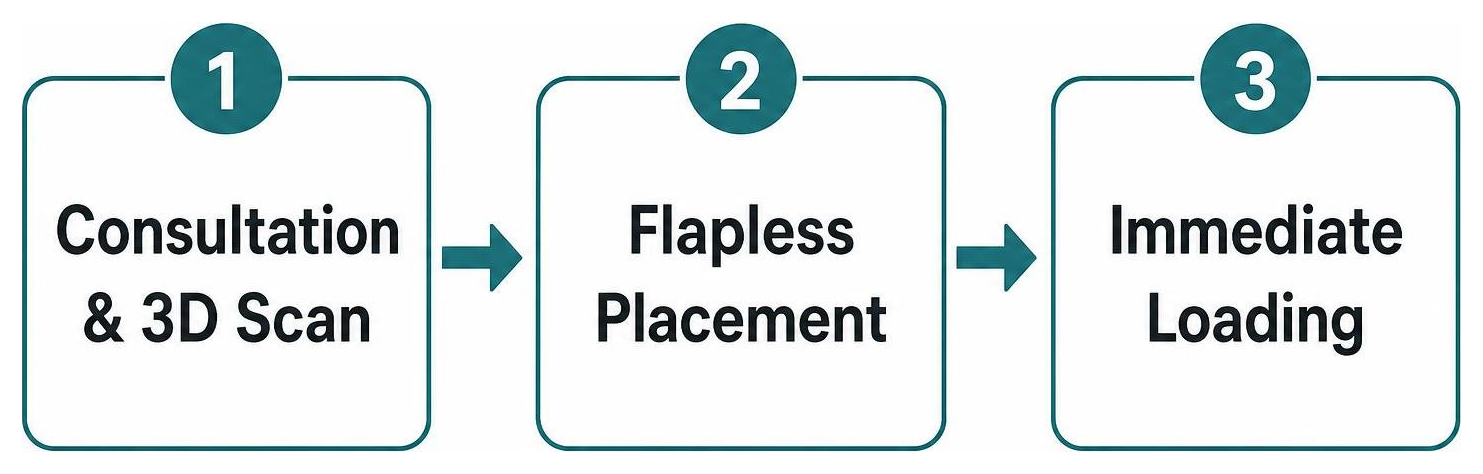
Consultation and 3D Imaging: We evaluate your jawbone architecture and plan placement positions using digital scans.
Local Anesthesia: We thoroughly numb the placement site. Most patients do not need IV sedation, though we provide relaxation options for anxious individuals.
Flapless Placement: We place each mini implant directly through the gum tissue into the bone in about 15 minutes per post.
Immediate Loading: In many overdenture cases, we secure your denture onto the implants during the very same visit.
Post-operative discomfort is usually mild and easily managed with over-the-counter pain relievers. Most patients resume work and normal daily routines within 24 to 48 hours. Primary soft-tissue healing finishes in under a week, while full bone integration (osseointegration) completes over the next 3 to 4 weeks.
Frequently Asked Questions About Mini Dental Implants
How long do mini dental implants typically last?
With routine oral hygiene and regular dental checkups, mini dental implants can last 10 to 15 years or longer. The Grade 5 titanium posts integrate directly with your jawbone. The only parts requiring periodic maintenance are the small rubber O-rings inside the denture housings, which snap out for simple replacement every 1 to 2 years during routine cleanings.
Can mini dental implants be placed without bone grafting?
Yes. In most cases, their narrow diameter (1.8 mm to 3.0 mm) allows us to place mini implants securely in areas with modest bone loss. This eliminates the discomfort, multi-month healing periods, and extra costs associated with bone grafting and sinus lift surgeries.
Are mini dental implants cheaper than traditional full arch implants?
Yes. Mini implant systems usually cost 40% to 60% less than traditional full-arch restorations (such as standard All-on-4 or hybrid fixed bridges). This savings comes from using fewer parts, streamlined single-piece posts, faster surgical times, and the elimination of complex bone grafting procedures.
Conclusion
Mini dental implants offer a dependable, budget-friendly way to replace missing teeth and stabilize loose dentures without extensive surgery. By avoiding bone grafts and utilizing a streamlined, one-piece titanium design, you can restore your chewing strength, smile confidence, and oral health at a fraction of the cost of traditional implants.
At Bradenton Implants & Smile Center, we combine advanced digital imaging with compassionate, personalized care to help you find the right treatment for your goals. Located at 7270 55th Ave E in Bradenton, FL, we proudly provide comprehensive restorative and implant dentistry solutions for adults and seniors across the local community. Contact our friendly team today to schedule your consultation and take the first step toward a secure, confident smile.