The Ins and Outs of Invisalign vs Braces
Invisalign vs. Braces: Which Is Right for You?
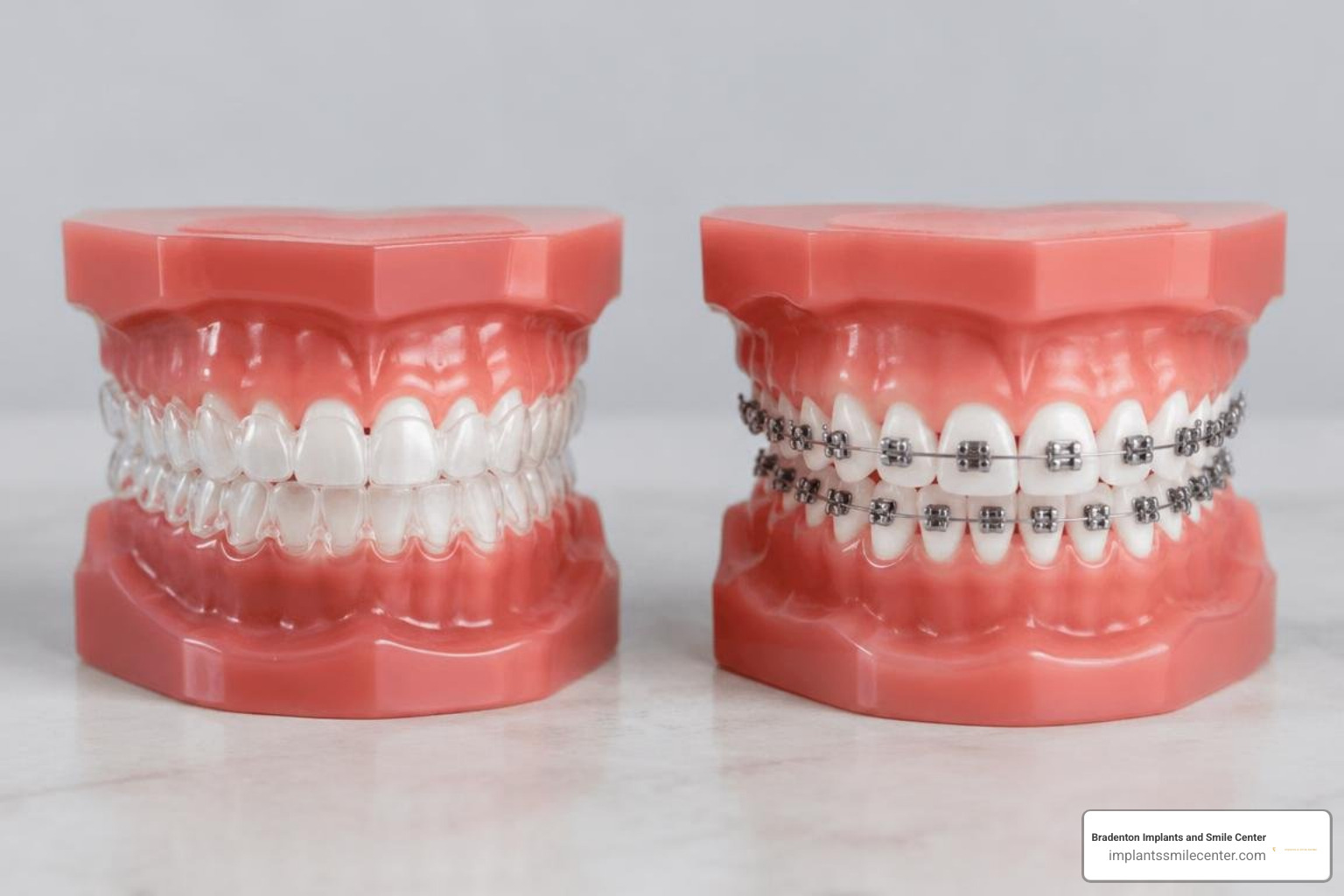
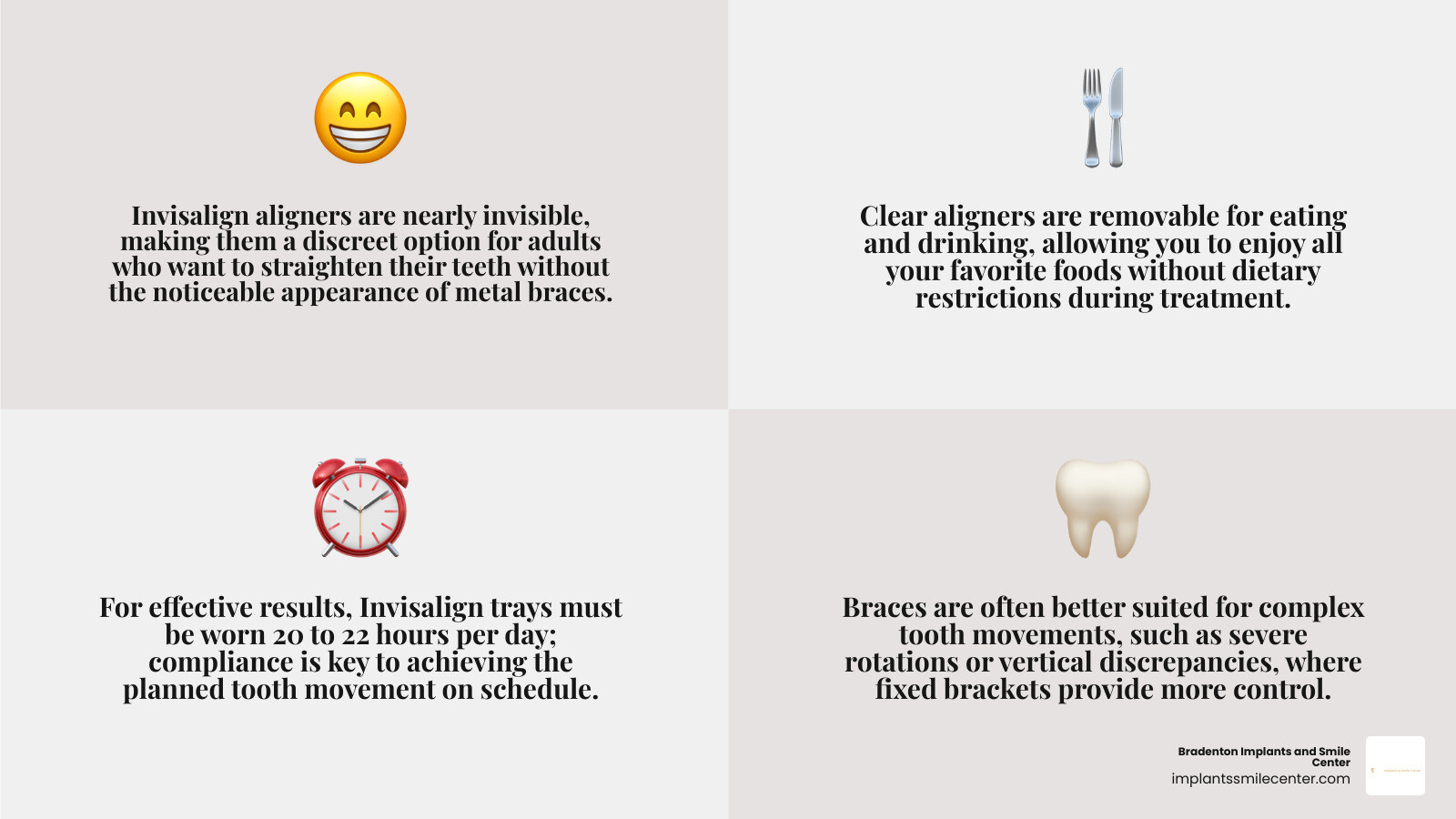
Invisalign uses removable, clear trays to straighten teeth. Braces use fixed brackets and wires. Both can treat crowded or spaced teeth, but braces may be a better fit for complex tooth movements. Invisalign is less noticeable and easier to remove for meals and brushing, but it works only if you wear the trays as directed, usually 20 to 22 hours a day.
The right choice depends on your teeth, bite, and daily habits. If you have missing teeth or gum concerns, a dental exam can help you plan the order of care.
I'm Dr. John Hegazin, a dentist with more than eight years of experience providing patient-centered care, including Invisalign treatment. I'll walk you through the trade-offs so you know what to ask before choosing a treatment.
How Invisalign Works: Technology, Process, and What to Expect
Modern orthodontic care has evolved far beyond the days when bulky metal bands were the only route to a balanced smile. The Invisalign system relies on a series of custom-molded, clear plastic aligners engineered from a patented multilayer thermoplastic material called SmartTrack. This material was developed specifically to deliver gentle, constant force, providing more predictable tooth movement compared to older, single-layer aligner plastics.
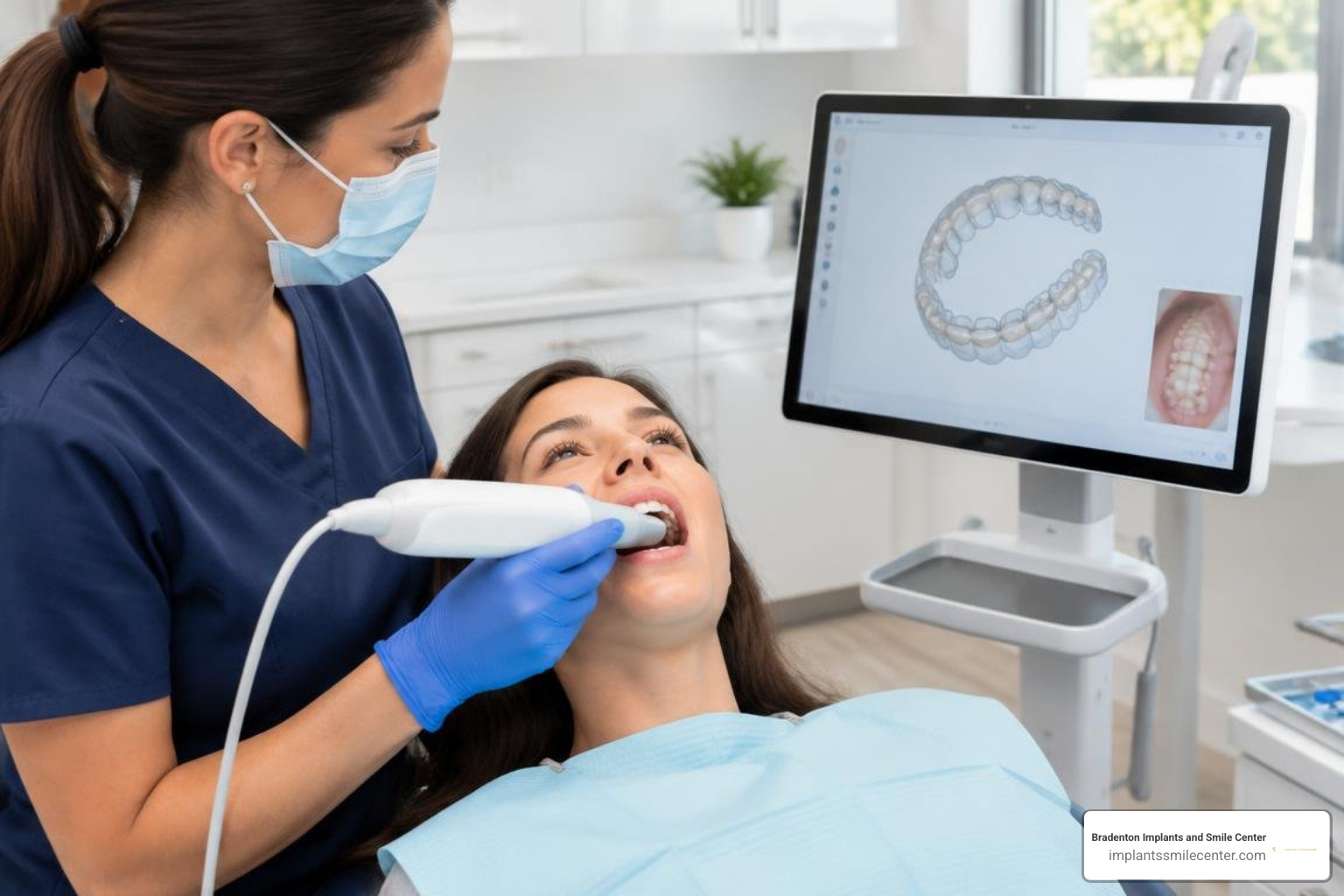
When we evaluate a patient for orthodontic therapy, we begin by capturing a comprehensive 3D digital model of the oral structures using an optical scanner. This eliminates the messy, uncomfortable alginate putty impressions of the past. Using advanced CAD/CAM software (such as ClinCheck), we map out the exact path each tooth must take from its starting position to the planned alignment.
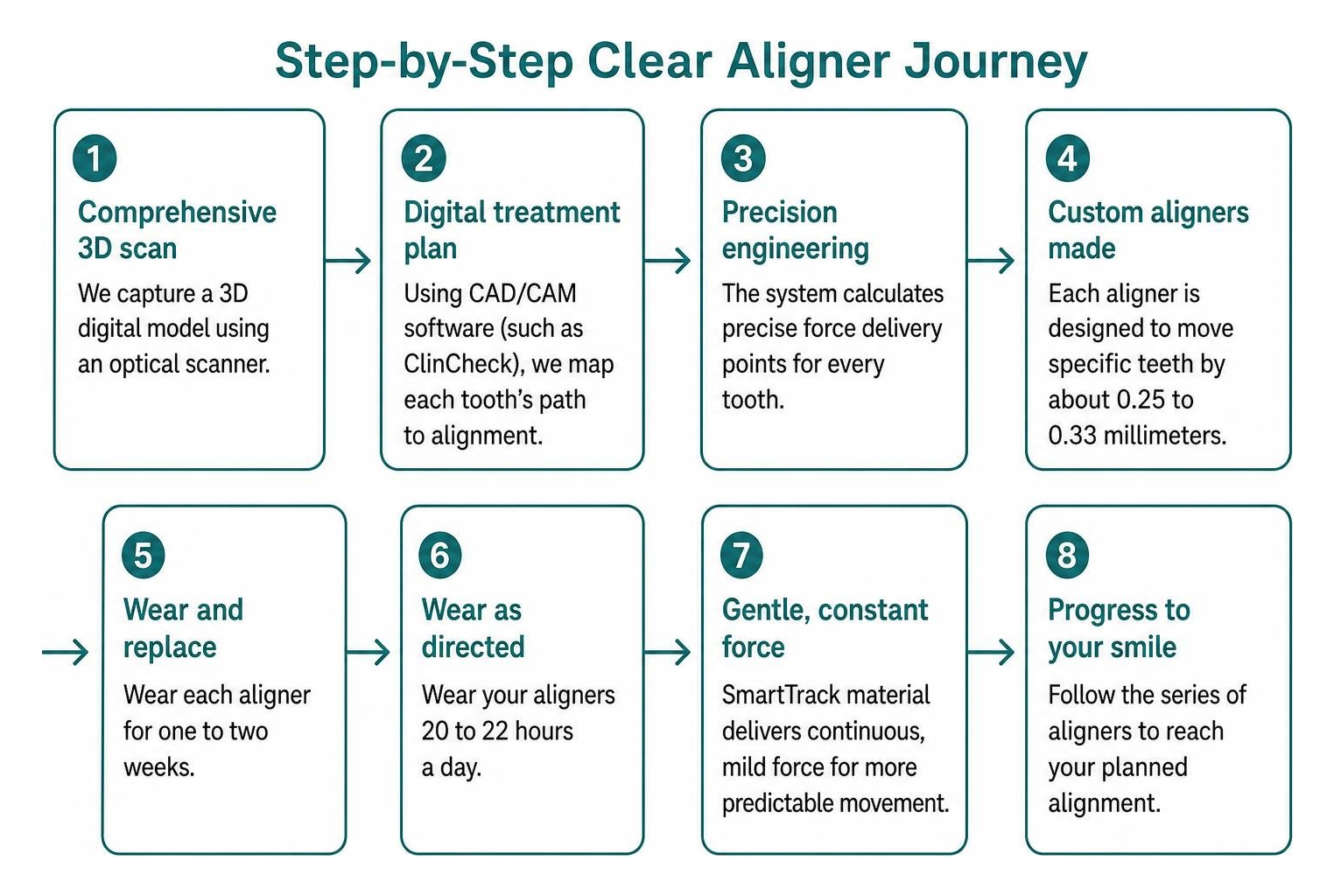
The system calculates precise force delivery points for every single tooth. Each aligner tray is designed to move specific teeth by roughly 0.25 to 0.33 millimeters over a one- to two-week period. Because the system utilizes continuous, mild force rather than the sharp tension adjustments associated with wire tightening, many patients find Invisalign for adults to be a far more manageable approach to correcting their alignment.
Step-by-Step Clear Aligner Journey
Starting clear aligner therapy is a straightforward, collaborative process:
Initial Consultation & Exam: We inspect the health of your teeth and gums, ensuring that any active cavities or periodontal conditions are treated before starting tooth movement.
3D Digital Scanning: An intraoral scanner takes thousands of high-definition images to create an interactive 3D digital model of your teeth.
Custom Treatment Design: We plan your tooth movements step by step and can show you a virtual preview of how your smile will progress.
Aligner Fabrication: Your custom series of aligner trays is precision-manufactured using advanced 3D printing and thermoforming techniques.
Attachment Placement & Delivery: In many cases, we place small, tooth-colored composite resin buttons (attachments) on specific teeth. These act as gentle grip points for the plastic trays. You receive your first sets of aligners along with wear instructions.
Active Progress Checkups: You swap to a new set of trays every 7 to 14 days as directed, visiting our office periodically so we can monitor your progress and provide your next sets.
Dental Issues Invisalign Can Correct
Clear aligners can treat a wide spectrum of functional and cosmetic concerns. Clinical evidence indicates that clear aligners are especially reliable for mild to moderate crowding (1 to 6 mm) and spacing issues (1 to 6 mm).
Specific conditions routinely corrected include:
Crowded Teeth: Overlapping teeth that trap plaque and make flossing difficult.
Spacing and Gaps: Spaces between teeth that can leave gum tissue exposed to irritation.
Overbite: When the upper front teeth excessively overlap the lower front teeth.
Underbite: When the lower front teeth sit forward of the upper teeth.
Crossbite: When one or more upper teeth bite inside the lower teeth.
Open Bite: When the front upper and lower teeth do not touch when the jaw is fully closed.
Orthodontic Relapse: Teeth that have drifted after past braces treatment because retainers were discontinued.
For patients looking to restore balance across their entire mouth, clear aligner therapy is frequently combined with other treatments as part of a comprehensive full mouth smile makeover to establish optimal spacing before final cosmetic touches.
Comparing Invisalign vs Braces: Effectiveness, Comfort, and Lifestyle
Choosing between clear aligners and traditional wire-and-bracket braces comes down to your personal lifestyle, aesthetic priorities, and the clinical complexity of your bite. Both systems are designed to shift teeth into proper alignment, but they achieve that goal through very different mechanisms.
Feature | Invisalign Clear Aligners | Traditional Metal Braces |
|---|---|---|
Material & Look | Clear, medical-grade SmartTrack plastic; nearly invisible | Metal or ceramic brackets bonded to teeth with archwires |
Removability | Removable for eating, drinking, and oral hygiene | Fixed permanently to teeth until removed by a dentist |
Daily Wear Requirement | 20 to 22 hours per day (requires self-discipline) | 24 hours per day (works continuously without patient effort) |
Dietary Restrictions | None (trays are removed while eating) | Avoid sticky, hard, crunchy, or chewy foods |
Oral Hygiene Routine | Normal brushing and flossing; easy aligner cleaning | Specialized threaders, interdental brushes, and extra time |
Typical Treatment Speed | 6 to 18 months for mild to moderate cases | 12 to 24+ months depending on case severity |
Comfort Level | Smooth plastic edges; mild pressure during tray changes | Potential for bracket rubbing, cheek irritation, and wire pokes |
Case Complexity | Ideal for mild to moderate crowding, spacing, and bite fixes | Handles severe skeletal discrepancies, heavy rotations, and extrusions |
Key Advantages of Invisalign Over Braces
The primary benefit of clear aligners is their discreet appearance. Most people will never notice you are wearing them, making them a preferred choice for working professionals and active adults.
Another major advantage is lifestyle flexibility. Because the trays are removable, you never have to give up crisp apples, popcorn, or chewy foods. You simply take the trays out, enjoy your meal, brush your teeth, and pop the aligners back in.
Routine oral care remains simple as well. Cleaning around fixed brackets and archwires can be tedious, but aligners allow you to brush and floss your natural teeth normally, which helps protect your gum health throughout treatment. Furthermore, because there are no brackets to pop off or wires to snap, you typically experience fewer emergency dental visits. For a broader look at the market and comparative systems, you can review independent research on clear aligner costs and alternatives.
Limitations and When Braces May Be Necessary
While clear aligner technology continues to improve, it is not always the best tool for every clinical situation. Traditional fixed braces offer mechanical advantages when managing:
Severe rotational movements (particularly on rounded teeth like premolars and canines).
Significant vertical tooth movements (extruding a tooth downward or intruding it deeply into the bone).
Large skeletal jaw discrepancies requiring major orthopedic correction.
Severe anterior-posterior bite shifts that need continuous, high-force mechanical anchorage.
Aligner therapy also relies heavily on patient compliance. If trays are not worn for the required 20 to 22 hours every single day, teeth will not track properly with the software plan, leading to stalled progress and extended timelines.
Treatment Timeline, Costs, and Financing Options in 2026
The duration of clear aligner treatment depends on the initial state of your teeth and how consistently you wear your trays. Across the dental industry, the average treatment time for clear aligners is roughly 12 to 18 months, with an average duration of approximately 13.5 months for moderate cases. Straightforward cosmetic alignment can sometimes take as little as 6 months, whereas complex bite corrections may require up to 24 months.
Factors Influencing Treatment Duration
Several variables directly influence how quickly you reach your final smile:
Wear-Time Compliance: Wearing your aligners for at least 20 to 22 hours per day is vital. Removing them for extended periods pauses movement and causes treatment delays.
Complexity of Tooth Movements: Closing minor gaps is faster than correcting a severe deep bite or rotating crowded front teeth.
Biological Response & Age: Bone remodeling rates vary by individual. Interestingly, some clinical observations note responsive movement rates in adults aged 35 to 50 who maintain excellent oral health.
Refinement Needs: Near the end of your initial tray series, slight adjustments (refinement trays) are often ordered to perfect the alignment.
Once alignment is complete, many patients choose to complement their newly straightened smile with professional teeth whitening to brighten their enamel.
Cost Breakdown and Insurance Coverage
The national average cost for Invisalign treatment ranges between $3,000 and $7,000, with many standard cases falling between $3,000 and $5,000 depending on complexity and location.
Navigating the financial side is often simpler than patients expect:
Dental Insurance: Many dental plans include orthodontic benefits that cover clear aligners just like traditional braces, significantly reducing how much clear aligners cost with insurance by up to $3,000.
FSA and HSA Funds: You can use pre-tax dollars from your Flexible Spending Account (FSA) or Health Savings Account (HSA) to pay for aligner therapy.
Monthly Payment Plans: Structured financing options for dental treatments allow you to spread the cost over manageable monthly payments without high upfront expenses.
Retainers and Long-Term Smile Maintenance
Your orthodontic journey does not end when your last active aligner tray is finished. Teeth have a natural tendency to drift back toward their original positions—a process known as orthodontic relapse. Studies have found that relapse in anterior (front) teeth can occur after any orthodontic treatment if retention is neglected.
To keep your teeth in their optimal positions, you will receive custom clear retainers (such as Vivera retainers). Initially, you may wear your retainer full-time for a few weeks, after which you will transition to wearing it only at night while sleeping. Keeping up with routine dental cleanings and regular exams ensures your alignment and bite remain stable over the long term.
Frequently Asked Questions About Invisalign and Braces
How many hours a day do I need to wear clear aligners?
You should wear your aligners for 20 to 22 hours every day. You should only remove them to eat meals, drink anything other than cool water, and complete your daily brushing and flossing routine. Leaving aligners out for too long slows down tooth movement and can cause your trays to stop fitting properly.
Is clear aligner treatment more painful than traditional braces?
Most patients report that clear aligners are significantly more comfortable than traditional braces. You will likely feel mild pressure or tightness for the first day or two after switching to a new tray, which is a normal sign that the aligner is gently shifting your teeth. However, clear aligners do not have metal brackets or wires that can poke or scrape the inside of your cheeks and lips.
What happens if teeth shift back after finishing aligner therapy?
If your teeth shift because a retainer was lost or not worn consistently, you can often correct the movement with a short course of touch-up aligners. To protect your smile, contact your dentist as soon as you notice any shifting so minor movements can be corrected before they progress further.
Conclusion
Choosing between clear aligners and traditional braces is an investment in your long-term oral health, daily comfort, and confidence. While fixed braces remain an effective option for severe structural and skeletal issues, Invisalign offers a discreet, comfortable, and lifestyle-friendly alternative for straightening mild to moderate crowding, spacing, and bite misalignments.
At Bradenton Implants & Smile Center, we are dedicated to helping our patients in Bradenton, FL achieve healthy, functional, and balanced smiles. Whether you are interested in clear aligners, restorative care, or a comprehensive smile plan, we invite you to schedule a personalized consultation with us today.