Free Government Dental Grants and How to Apply for Them

The Real Truth About Free Grants for Dental Work (And How to Get Them)
Free grants for dental work exist — but they are not always easy to find or qualify for. Here is a quick overview of your main options:
Grant Program | Who It's For | How Much | Covers |
|---|---|---|---|
Stevenson Dental Foundation | Low-income adults with dental need | Up to $5,000 (lifetime) | Implants, cleanings, crowns, dentures |
Cosmetic Dentistry Grants (CDG) | Anyone wanting cosmetic work | Partial (varies) | Veneers, implants, Invisalign |
Smile Fund USA | Low-income adults (San Diego area) | Up to $950 per grant | Dental implants |
Donated Dental Services (DDS) | Seniors 65+, disabled, or medically compromised | Up to 100% | Basic restorative care |
Delta Dental Foundation | Non-profit organizations | $10,000+ or mini-grants | Oral health programs |
Grin Grant (Kentucky) | Adults in addiction recovery | Varies | Dental implants |
Most programs offer partial funding, not a full free ride. And most have strict eligibility rules — including income limits, geographic restrictions, and requirements to use an approved dentist.
The good news? There are more options than most people realize, and some programs do not require you to be low-income to qualify.
I'm Dr. John Hegazin, owner of Bradenton Implants and Smile Center, with over 8 years of experience helping patients restore their smiles through implants, dentures, and advanced restorative care. I've guided many patients through navigating free grants for dental work alongside flexible financing options to make treatment truly affordable.
Understanding Free Grants for Dental Work: What You Need to Know
When people search for free grants for dental work, they often picture the federal government mailing them a check to pay for their new teeth. In reality, the dental grant landscape is a bit more structured.
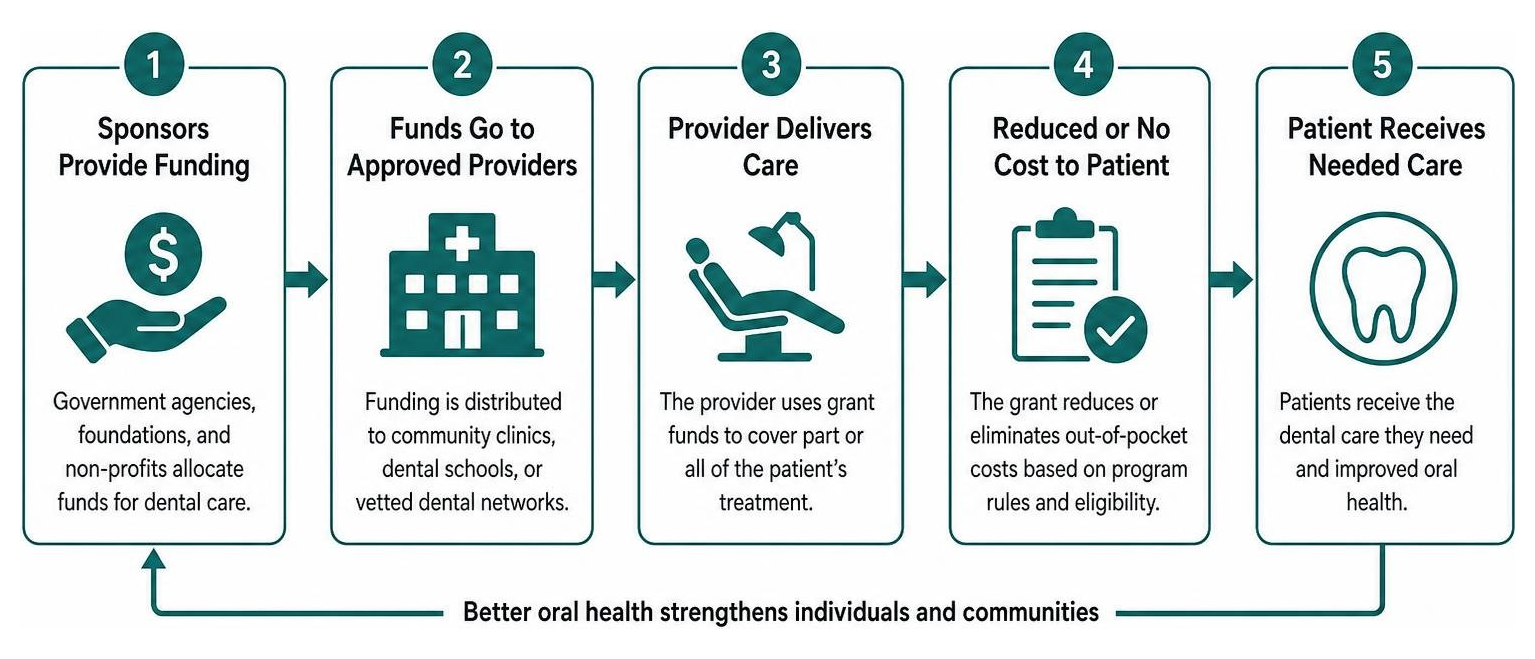
Most dental grants are not awarded directly to individual patients as cash. Instead, government funding and non-profit organizations distribute these funds to community clinics, dental schools, or vetted networks of private dentists. The dentist then uses those funds to "buy down" or completely cover the cost of your treatment.
To help you understand your financial options, here is how dental grants compare to standard dental insurance and government programs like Medicaid:
Feature | Dental Grants | Dental Insurance | Medicaid (Dental) |
|---|---|---|---|
Who Pays? | Non-profits, foundations, or state programs | You (via premiums) + Insurance company | Federal & State government |
Typical Coverage | 25% to 100% of specific treatments | 50% to 80% of basic care (with annual caps) | Varies wildly by state; often emergency-only for adults |
Out-of-Pocket Costs | Varies (often partial; diagnostic fees may apply) | Deductibles, co-pays, and costs over the annual maximum | Usually $0 or very low co-pays |
Provider Restraints | Must use a participating, approved dentist | Must use in-network dentist for best rates | Must find a dentist who accepts Medicaid |
Cosmetic Coverage | Yes, through specific cosmetic programs | Almost never | Never |
If you do not qualify for a grant, there are still excellent alternatives available. You can look into government loans for dental work to find low-interest financing options designed specifically for medical care.
Who Qualifies for Free Grants for Dental Work?
Eligibility for dental grants depends entirely on the program you apply to. Generally, programs that offer 100% free care have the strictest requirements. They typically target underserved populations who face severe financial or physical barriers.
Common qualifying criteria include:
Low-Income Status: Many programs require your household income to be at or below 200% of the Federal Poverty Level.
Age Requirements: Some grants are reserved exclusively for seniors aged 65 and older.
Permanent Disability: Individuals with physical or mental disabilities often receive priority.
Medically Compromised: Patients who need dental clearance before undergoing major medical procedures (like organ transplants or chemotherapy) can be fast-tracked for care.
A prime example of a program with strict eligibility is the DONATED DENTAL SERVICES (DDS) program. Operated by the Dental Lifeline Network, DDS relies on volunteer dentists who provide free, comprehensive treatment to seniors, people with permanent disabilities, or those who are medically fragile. Because the dentists volunteer their time and receive no compensation, the waitlists can be several months to over a year long.
How to Apply for Free Grants for Dental Work
The application process for a dental grant requires preparation and patience. Because funding is limited, programs must carefully vet applicants to ensure the resources go to those who need them most.
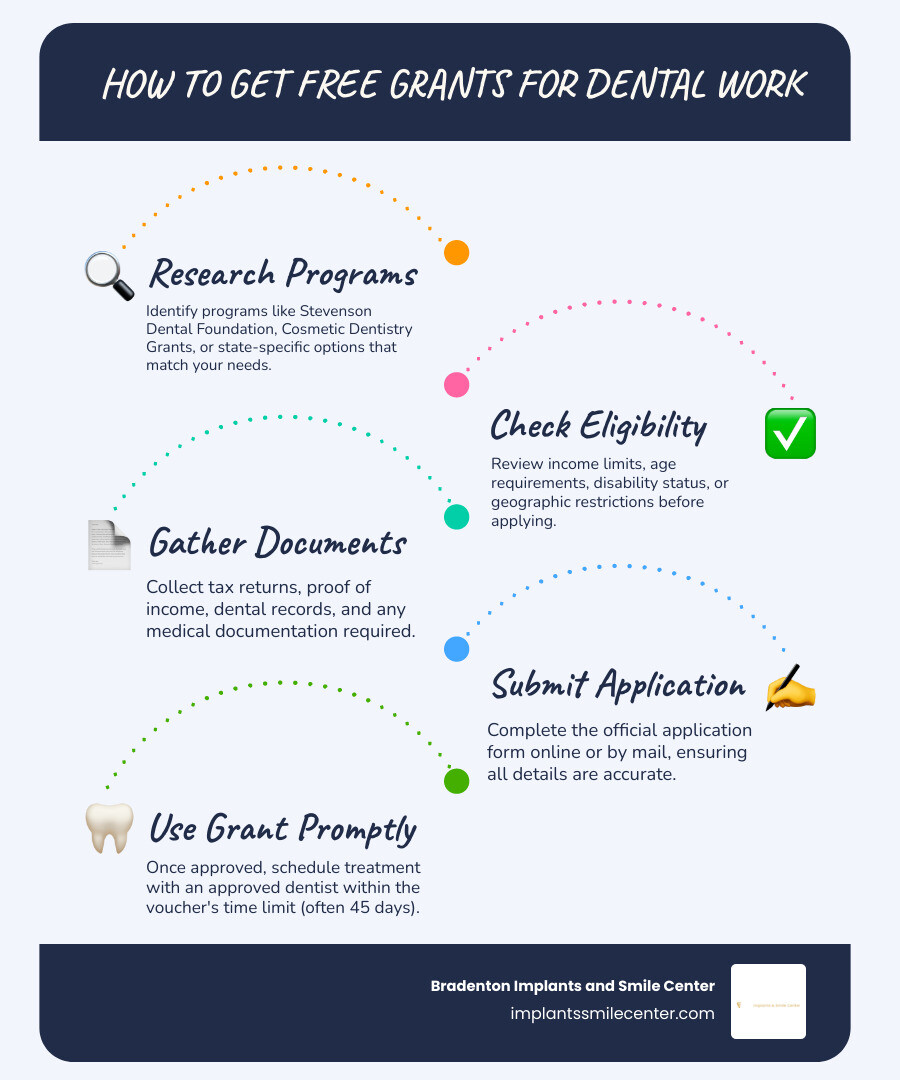
Here is the general step-by-step process to apply:
Find a Program: Identify a grant program that aligns with your needs and location. For example, if you are looking for a program that offers partial assistance for a variety of needs, you might explore the Apply Now | Dental Grants Program | Special Case Needs portal.
Gather Documentation: You will need to prove your financial and medical situation. Be prepared to provide:
Recent tax returns
Proof of income (pay stubs, Social Security award letters, or SNAP benefits)
A signed consent form (HIPAA authorization)
Get a Dental Assessment: Most programs require a licensed dentist to examine your mouth and write a formal treatment plan. This plan outlines exactly what work you need.
Submit Your Application: Send your completed application, treatment plan, and financial documents to the grant coordinator.
Types of Dental Grants and What They Cover
Not all dental work is treated equally by grant programs. Most dental grants are designed to restore basic oral function—meaning they want to make sure you can chew, speak, and live without pain.
Grants for Dental Implants and Restorative Care
Dental implants are widely considered the gold standard for replacing missing teeth, boasting an impressive 97% success rate. However, because they require surgery, specialized materials, and multiple appointments, they can be expensive.
Fortunately, there are specific grants designed to help cover these costs:
The Stevenson Dental Foundation: This foundation provides a Dental Care Grant - Stevenson Dental Foundation that offers up to $5,000 per applicant for life. These grants can be used for essential restorative procedures, including deep cleanings, decay removal, crowns, dentures, and dental implants. The funds are kept in escrow and paid directly to the dental provider.
The Smile Fund: This organization focuses on providing implant access grants. For instance, the Smile Fund recently received $10,000 in funding from the LB Charitable Foundation to provide low-income adults with $950 vouchers specifically for dental implants. You can learn more about their strict guidelines and application process via the FOR PATIENTS | Dental Implant Grant Information portal.
If you are a senior looking for ways to make implants affordable, you can also read our guide on senior affordable dental implants or check out affordable implants for seniors to learn about additional saving strategies.
Cosmetic Dentistry Grants
If you want to improve the appearance of your smile rather than fix a medical issue, you will need to look at cosmetic dentistry grants. Programs like the Cosmetic Dentistry Grants (CDG) Program allocate up to $1 million in resources each year to help applicants pay for elective procedures like veneers, whitening, crowns, bridges, and Invisalign.
However, there is a catch: CDG grants are partial grants. They typically cover 25% to 30% of your cosmetic treatment plan. Furthermore, the program requires that your mouth be in good basic health before you can receive cosmetic funding. This means any basic dentistry—such as fillings, cleanings, or extractions—must be completed first at your own expense.
To understand how these tiered discounts are applied to your treatment plan, you can read more about How the Program Works | Dental Grants Program | Official Website . For more ideas on managing costs, take a look at our affordable dental implants guide 2026.
State-Specific Dental Grant Programs
Many of the largest dental grant programs are restricted to residents of specific states due to local funding sources.
California: The state features the Specialty Dental Clinic Grant Program, managed by the California Health Facilities Financing Authority (CHFFA). This program has a massive $50 million in available funding, with individual organizational grants capped at $5 million, to build dental infrastructure for special needs populations.
Kentucky: The Smile Restoration Charity | GrinGrant.org program offers dental implant grants specifically to Kentucky residents who are in long-term addiction recovery (requiring at least 6 months of continuous recovery and a year of active program participation).
Florida Dental Care Alternatives
If you live in Bradenton, Florida, you cannot apply for California or Kentucky state grants. However, Florida has its own highly effective programs and charitable events designed to help local residents get free or low-cost dental work.
Florida Mission of Mercy (FLA-MOM): This is a large-scale, two-day professional dental clinic held annually in different locations across the state. Organized by the Florida Dental Association Foundation, it provides 100% free dental care—including cleanings, fillings, extractions, and limited restorative work—to thousands of patients on a first-come, first-served basis. You can check upcoming event dates and locations at the Florida Mission of Mercy page.
Turning Points Free Dental Clinic: Located right here in Bradenton, Manatee County, Turning Points provides free basic dental care to local low-income and uninsured individuals. They focus on relieving pain and restoring oral health through extractions, cleanings, and fillings. You can learn more about their eligibility requirements on the Turning points Free Dental Clinic website or view their medical services at the Medical & Dental Clinic portal.
Frequently Asked Questions About Dental Grants
Navigating dental grants can be confusing. Here are answers to the most common questions patients ask us.
How long does the application and approval process take?
The timeline varies significantly depending on the type of grant:
Cosmetic and Partial Grants: Programs like the Cosmetic Dentistry Grants program typically take 30 to 60 days to notify you of a partial grant award. Once awarded, you usually have 30 days to accept it and 3 months to begin your treatment.
Charity and Voucher Programs: Programs like the Smile Fund issue vouchers that have strict expiration dates—often a 45-day limit from the date of issuance.
100% Free Programs (like DDS): Because these rely entirely on volunteer dentists, waitlists are common and can range from several months to over a year.
Can I use a dental grant with my existing dental insurance?
Yes, in many cases you can coordinate a partial dental grant with your dental insurance to further lower your out-of-pocket costs. However, you must follow specific rules:
Insurance First: Most programs require your dental insurance to pay its portion first. The grant is then applied to the remaining balance.
Medicaid Rules: If you are on Medicaid, charity programs like Donated Dental Services (DDS) typically require you to exhaust all of your Medicaid dental benefits before they will cover any remaining treatments.
What are the common restrictions or conditions attached to dental grants?
Dental grants always come with "fine print." The most common restrictions include:
Approved Provider Networks: You cannot use a dental grant with just any dentist. To prevent fraud and maintain tax-exempt status, grant foundations require you to see a vetted, participating dentist within their network.
Diagnostic Fees: While the initial consultation is often free, the comprehensive exams and x-rays required to create your treatment plan are usually not covered by the grant, costing between $157 and $386 out-of-pocket.
Non-Covered Procedures: Purely cosmetic treatments (like teeth whitening) are excluded from restorative grants, while basic treatments (like root canals) are excluded from cosmetic grants.
Conclusion
While free grants for dental work are an amazing resource, they are often highly competitive, geographically restricted, or only cover a portion of your treatment.
If you live in Bradenton, Florida, and need high-quality dental care, you don't have to wait on a long government waitlist to get the smile you deserve. At Bradenton Implants & Smile Center, we provide personalized, compassionate general, restorative, implant, and cosmetic dentistry.
We utilize modern technology and advanced techniques to deliver life-changing results. To make your treatment plan stress-free and affordable, we offer a variety of special offers and flexible financing options. We can help you explore dentists that do payment plans or find dental loans with no credit check so you can start your treatment immediately.
Whether you are interested in affordable permanent teeth, want to compare the best low cost dental implants, or need a comprehensive financing full mouth dental implants guide, we are here to help.
Ready to take the first step toward a healthy, confident smile? Check out our faq page, explore government loans for dental work for structured financing options, or contact us today to schedule your consultation at our Bradenton office!