What to Expect During All-on-6 Implant Recovery
What to Expect During All-on-Six Implant Recovery
With all on six implants, six implants support a fixed arch of replacement teeth. Recovery happens in stages: expect some swelling and soreness at first, followed by weeks of healing while the implants bond with your jawbone. You may receive temporary teeth during this time, but you will need to follow your dentist's instructions on food and cleaning. The final bridge is usually fitted after healing, often a few months later.
I'm Dr. John Hegazin. With over eight years in dentistry and experience in implant care, full-mouth dental implants, and Teeth in a Day, I help patients understand what recovery from all on six implants may involve.
Understanding the Concept and Biomechanics of All-on-Six Implants
When rebuilding an entire arch of missing or compromised teeth, the mechanical framework supporting your new smile makes all the difference. Full-arch rehabilitation replaces 10 to 14 teeth using a fixed, screw-retained bridge anchored to the jawbone. While traditional approaches often required eight or more individual posts per arch, modern protocols streamline this process.
The All-on-6 concept utilizes six strategically placed endosseous dental implants distributed along the natural curvature of the dental arch. Placing six posts creates a broader anterior-posterior spread, providing substantial bite force support and superior load distribution during chewing (Tripathi et al., 2024). For patients exploring comprehensive full mouth dental rehabilitation, understanding these biomechanical principles helps set realistic expectations for surgical stability and daily function.
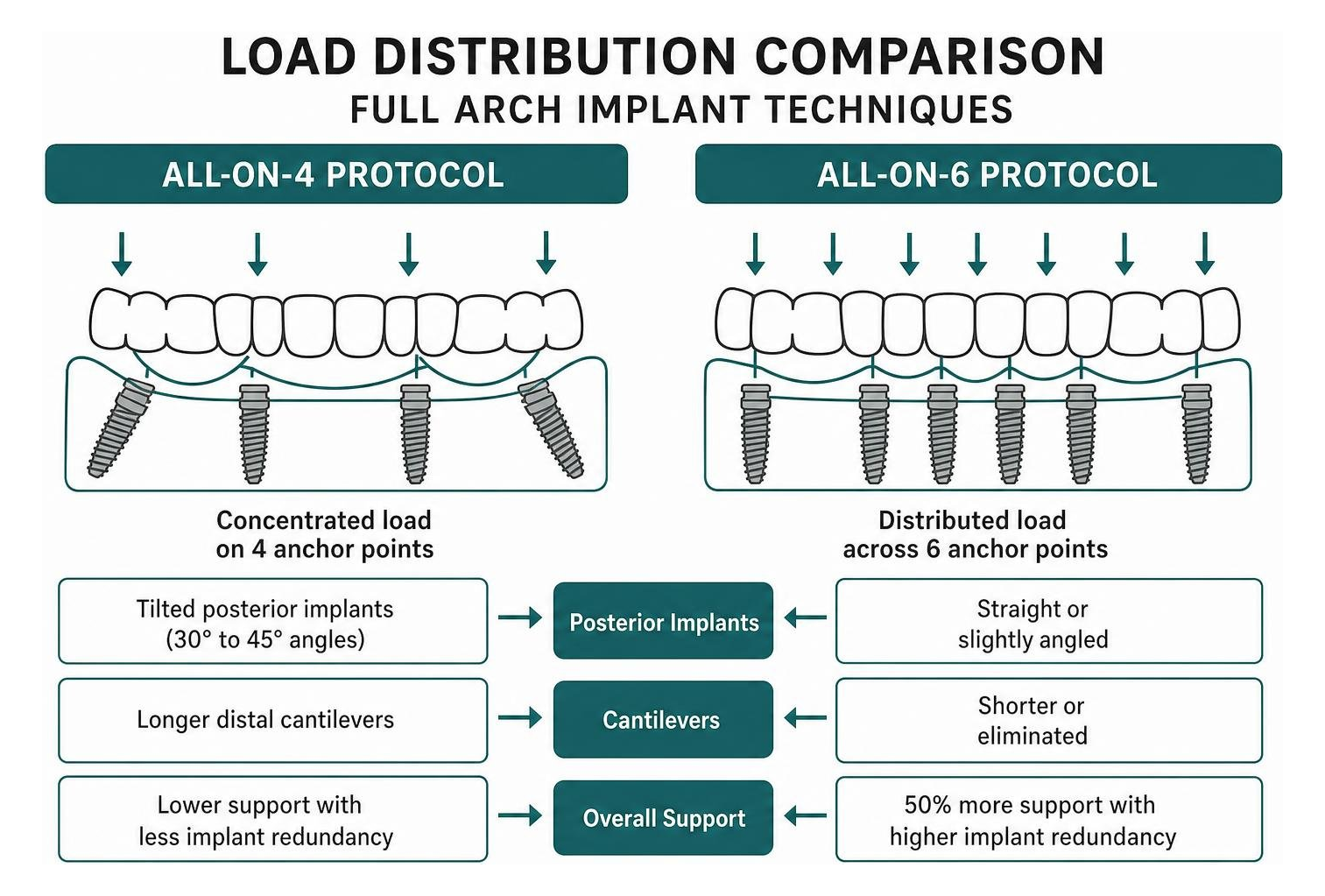
Feature | All-on-4 Protocol | All-on-6 Protocol |
|---|---|---|
Number of Implants | 4 posts per arch | 6 posts per arch |
Posterior Implants | Tilted at 30° to 45° angles | Straight or slightly angled |
Load Distribution | Concentrated on 4 anchor points | Distributed across 6 anchor points (50% more support) |
Distal Cantilevers | Often longer to reach back molars | Shorter or eliminated |
Bone Density Needs | Tolerates moderate posterior bone loss | Requires sufficient bone volume in posterior regions |
Implant Redundancy | Low (failure of one compromises arch) | High (additional anchor provides safety margin) |
Why Choose All-on-Six Implants Over Other Full-Arch Solutions?
A key mechanical advantage of the six-implant design is the reduction of cantilever length. A cantilever is the unsupported section of a dental bridge extending past the rearmost implant to restore back chewing surfaces. Longer cantilevers create higher leverage forces, increasing bending stress on the bone and prosthetic screws. By placing implants further back into the molar sites, All-on-6 eliminates excessive extension, providing approximately 50% more structural support compared to four-implant options.
This extra reinforcement is particularly beneficial for individuals with larger jaw structures or those who suffer from chronic bruxism (teeth grinding). Heavy biters generate substantial masticatory forces that can wear down components over time. You can learn more about how different configurations support long-term durability in our full arch restoration guide.
Clinical Candidacy and Patient Evaluation
Determining whether you are an ideal candidate for All-on-6 begins with comprehensive diagnostic imaging. We utilize high-resolution Cone Beam Computed Tomography (CBCT) 3D scans to evaluate your exact bone volume, density, and spatial relationships with vital structures such as the maxillary sinuses and mandibular nerve canal.
Because All-on-6 requires stable bone in both the front and back of the jaw, patients with significant bone atrophy may require preliminary or concurrent bone grafting to create an adequate foundation.
Digital planning tools have also made full-arch restorations accessible to individuals facing complex health conditions. Advanced photogrammetry and dynamic surgical guides allow clinicians to rehabilitate patients with movement disorders, such as essential tremor, by safely translating digital wax-ups into precise surgical placements. For deeper insight into these techniques, read the scientific research on guided all-on-six protocols, which highlights how modern digital workflows preserve stable occlusal schemes.
Step-by-Step Surgical Workflow and Healing Milestones
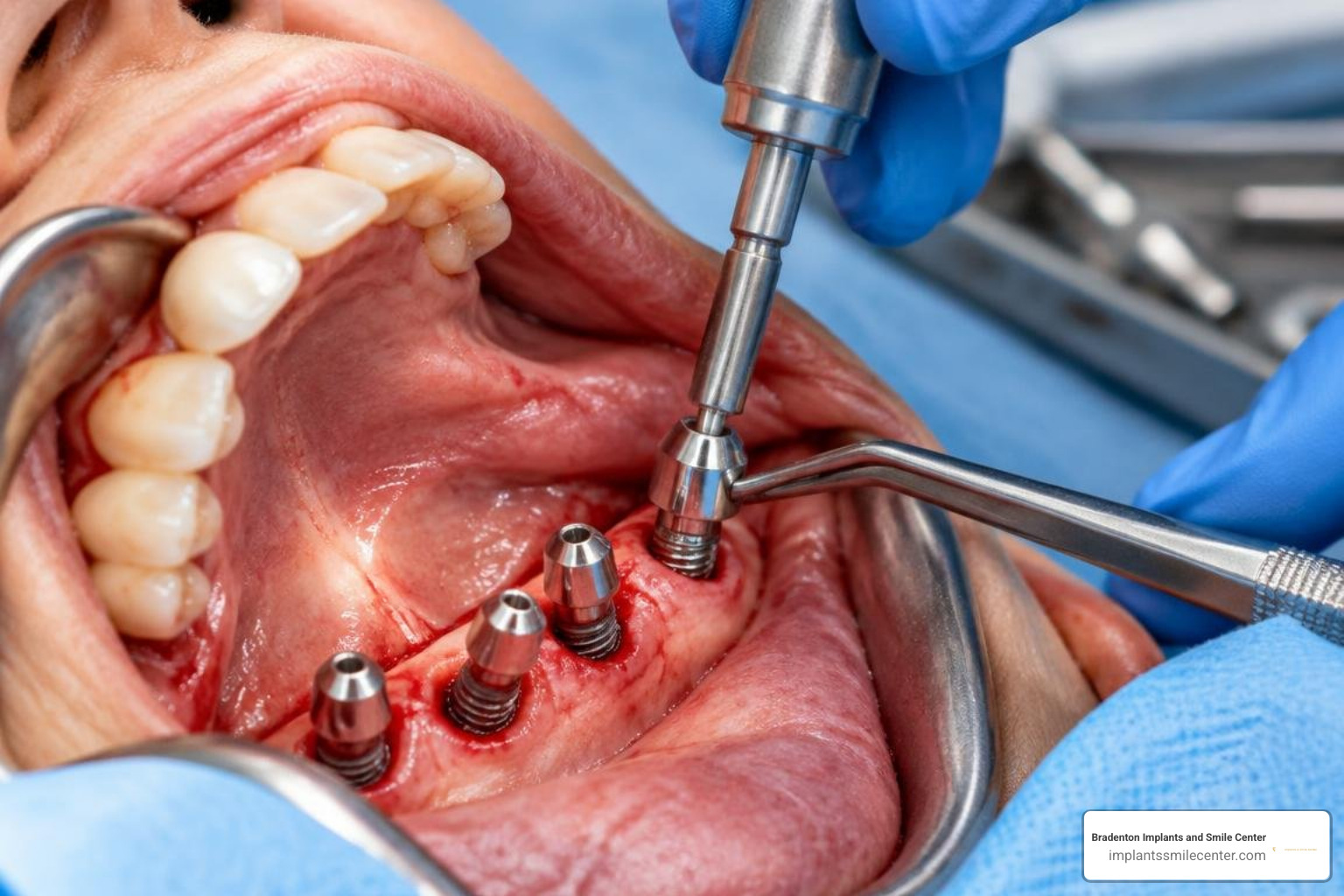
Achieving a stable, beautiful smile involves a synchronized surgical and prosthodontic approach. Following any necessary extractions, six implants are placed into predetermined sites in the jawbone. To allow for immediate temporization, our surgical team ensures the implants achieve a primary stability insertion torque of at least 35 Ncm (Jánosi et al., 2025).
Straight and angulated multi-unit abutments are connected to the fixtures to correct path-of-insertion angles, and a customized provisional bridge made of high-density polymethyl methacrylate (PMMA) is attached within 24 to 48 hours. This allows you to walk away with a fixed, functional set of teeth while the biological healing process gets underway. To explore the foundational stages in detail, review our guide to the dental implant surgical procedure.
The First 48 Hours: Managing Post-Operative Symptoms
The initial two days following surgery focus on tissue recovery and comfort:
Swelling and Bruising: Facial swelling typically peaks around 48 to 72 hours post-surgery. Apply an ice pack wrapped in a cloth to your outer cheek in 20-minute intervals (20 minutes on, 20 minutes off) to minimize tissue inflammation.
Discomfort Relief: Mild-to-moderate soreness is managed using prescribed analgesics or over-the-counter anti-inflammatories, taken strictly as directed.
Minor Bleeding: Light oozing or pinkish saliva is normal for the first 24 hours. Gently biting on a sterile gauze pad will help control it. Avoid vigorous spitting, rinsing, or drinking through straws, as suction can dislodge forming blood clots.
Initial Nutrition: Stick entirely to cool, smooth liquids and non-chew foods, such as smoothies (eaten with a spoon), lukewarm broths, and yogurt.
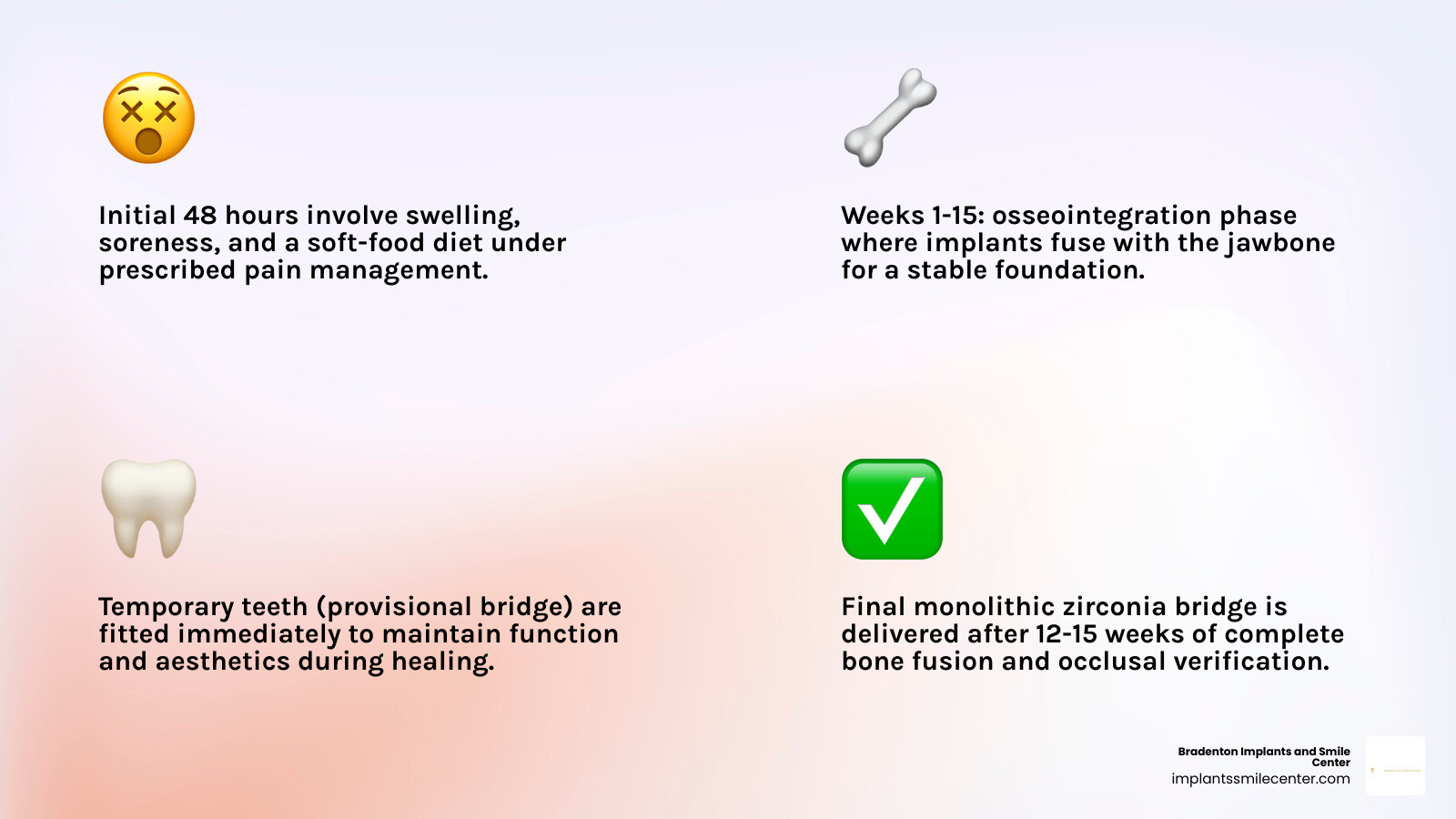
Weeks 1 Through 15: Osseointegration and Tissue Healing
Between weeks 1 and 15, your body undergoes osseointegration—the biological process where living jawbone cells fuse directly to the biocompatible titanium or ceramic implant surfaces.
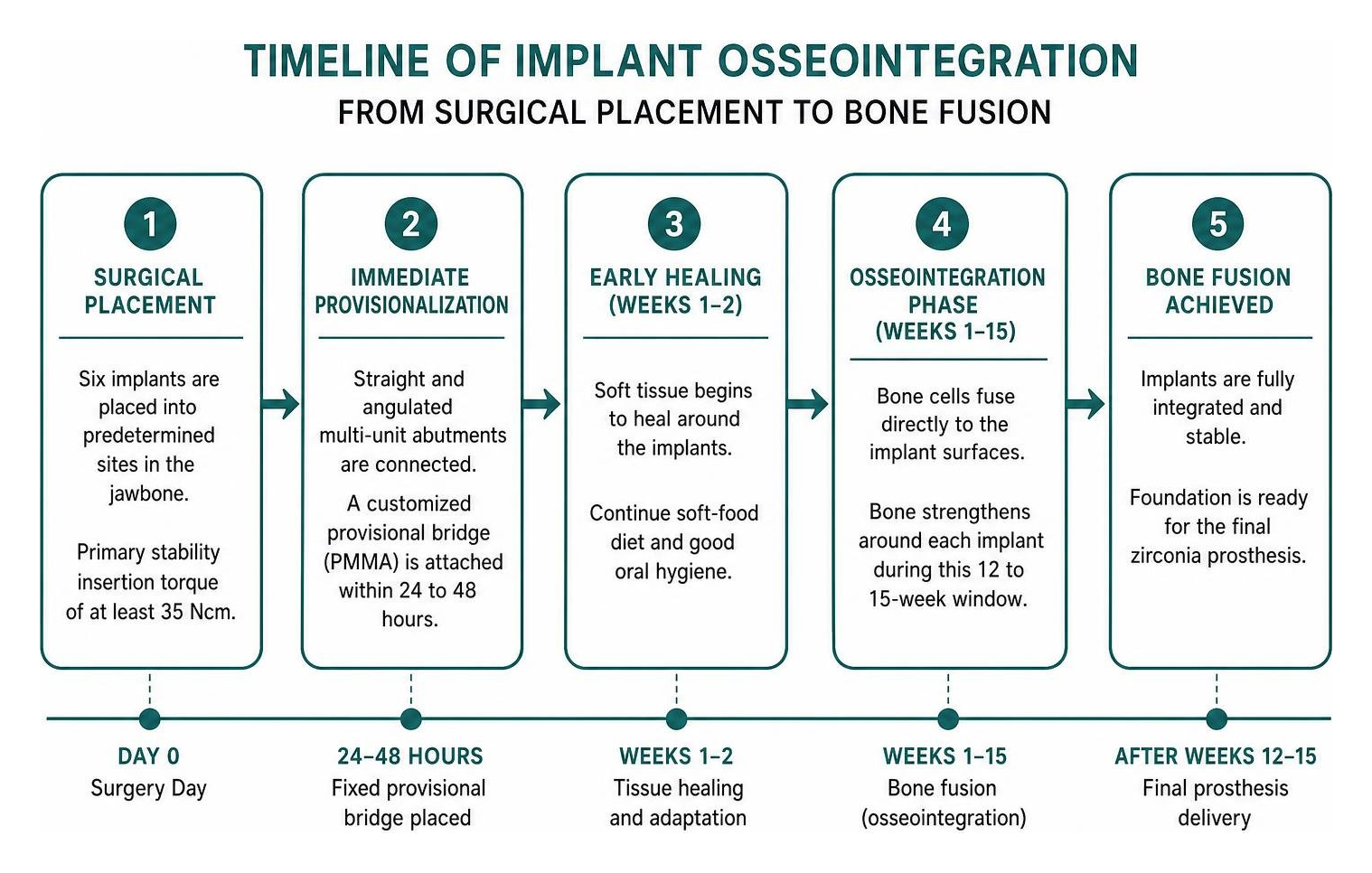
During this 12 to 15-week healing window, the bone strengthens around each post (Tripathi et al., 2024). While modern immediate teeth protocols allow you to wear a temporary fixed bridge right away, you must adhere strictly to a soft-food diet. The bone-implant interface is delicate; excessive micro-movements caused by chewing tough or crunchy foods can disrupt osseointegration and lead to implant instability.
Clinical evaluations have documented how immediate provisional PMMA restorations provide excellent comfort and functional preservation without interfering with the underlying bone fusion (Jánosi et al., 2025). Regular follow-ups allow your dental team to assess gum health, adjust bite contacts, and ensure your healing remains smooth and on track.
Delivery of the Final Zirconia Prosthesis
Once osseointegration is confirmed—usually around month 4 or 5—the restorative phase transitions from the provisional bridge to the final, definitive restoration. Digital impressions or photogrammetry scans record the precise 3D locations of the integrated implants.
The final arch is custom-crafted from premium, biocompatible materials, such as monolithic zirconia or a Direct Metal Laser Sintering (DMLS) framework paired with individual ceramic crowns (Tripathi et al., 2024). Monolithic zirconia is exceptionally durable, non-porous, and chip-resistant, mimicking the natural translucency of tooth enamel while resisting surface staining. Once fitted and torqued into place, screw access channels are sealed with tooth-colored composite resin, delivering a seamless, permanent smile.
Long-Term Maintenance and Success Factors
With proper home care and regular professional oversight, published 5- to 10-year survival rates for full-arch implant restorations remain between 95% and 99%. While the titanium implant posts integrated into your jaw can last a lifetime, the prosthetic bridge itself is designed to endure for 15 to 20 years or longer before requiring maintenance or replacement.
To maintain your new teeth, establish a consistent daily oral hygiene routine:
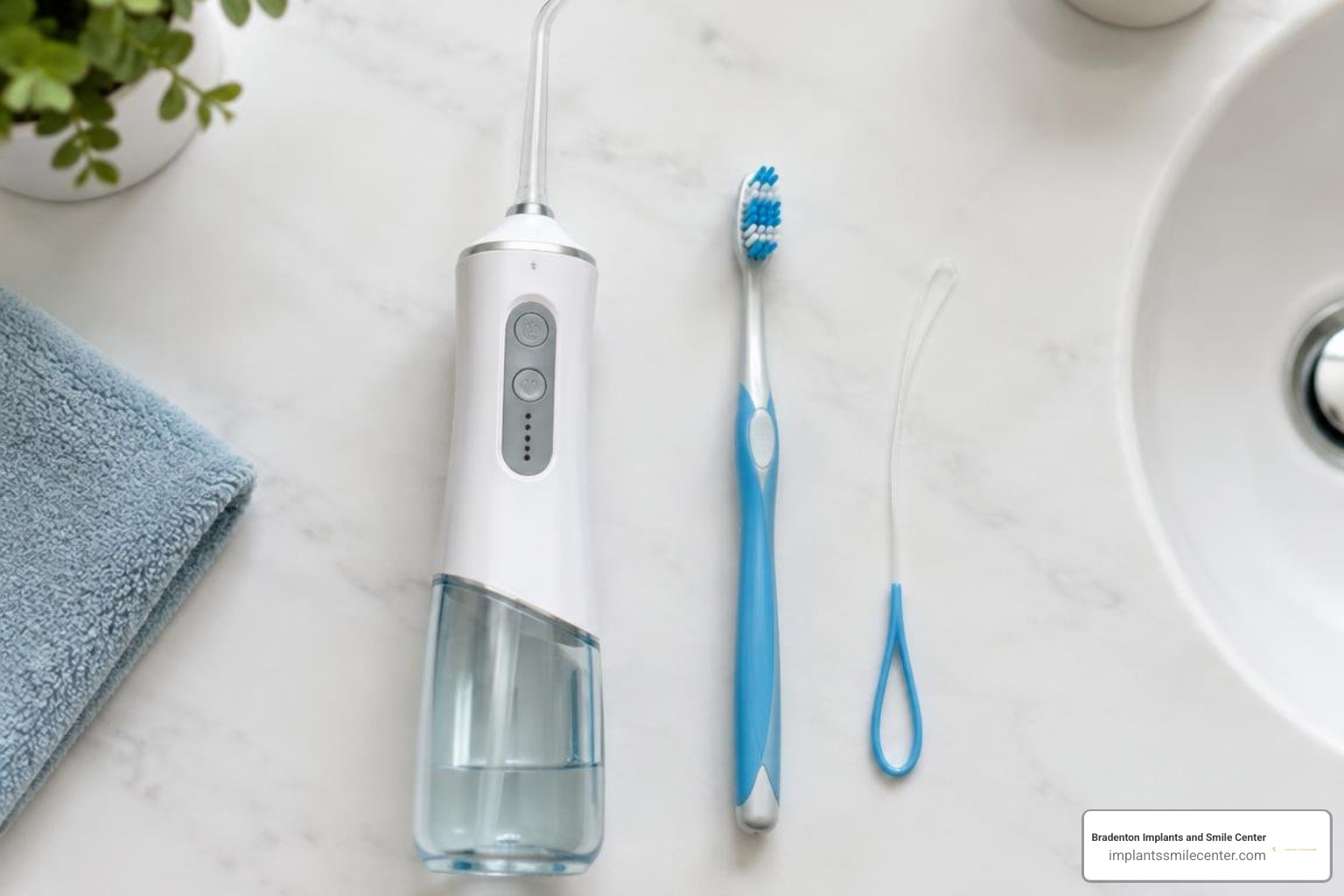
Water Flossers: An oral irrigator set to a low or medium pressure sweeps away food debris and biofilm trapped underneath the bridge.
Interdental Brushes: Use plastic-coated micro-brushes to clean around abutments without scratching the metal surfaces.
Electric Toothbrushes: A soft-bristled oscillating brush cleans the prosthetic teeth and gently massages the gum margin.
Non-Abrasive Pastes: Avoid heavily abrasive whitening toothpastes that can scuff the polished finish of your restoration.
Managing Complications and Long-Term Care for All-on-Six Implants
Protecting your investment requires ongoing attention to your peri-implant tissues. The primary biological risk is peri-implantitis—an inflammatory condition caused by bacterial plaque accumulation that leads to soft-tissue breakdown and progressive bone loss around the implants. Catching inflammation early during routine checkups prevents minor complications from threatening the underlying bone foundation.
Mechanical maintenance is also part of regular care. Over years of use, prosthetic retaining screws may loosen, or the gumline beneath the bridge may subtly adapt, requiring minor occlusal adjustments or screw replacements. Professional dental cleanings every six months allow our team to evaluate structural integrity and remove stubborn calculus deposits. Exploring affordable treatment planning helps you budget for both the initial rehabilitation and future preventive care.
Frequently Asked Questions About All-on-6 Implants
How painful is recovery after all-on-6 surgery?
Most patients report far less discomfort than they anticipated. The procedure is performed under local anesthesia alongside relaxing oral or IV sedation, ensuring you feel no pain during surgery. Afterward, post-operative soreness resembles a deep, dull ache rather than sharp pain, typically peaking within 48 to 72 hours before tapering off. Standard analgesics and cold compresses provide manageable, steady relief.
How soon can I eat solid foods after the procedure?
You must maintain a soft-food, non-chew diet for the entire 12 to 15 weeks while the implants osseointegrate with the bone. Think of foods that can be easily cut with the side of a plastic fork: scrambled eggs, soft fish, flaked salmon, mashed potatoes, steamed vegetables, and pasta. Once your permanent zirconia arch is securely fitted, you can comfortably transition back to your favorite solid and crunchy foods.
How much do all-on-six implants cost compared to all-on-four?
Because the All-on-6 protocol incorporates two additional implant fixtures, specialized abutments, and broader surgical planning, it typically costs slightly more than an All-on-4 approach. For an in-depth breakdown of pricing factors and material selections, consult our full mouth implant cost breakdown, or review current all-on-4 pricing to evaluate which configuration matches your personal goals.
Conclusion
Recovering from an All-on-6 procedure is a structured, predictable journey that replaces broken or missing teeth with a stable, confident smile. By following clear recovery guidelines, maintaining a soft diet during osseointegration, and caring for your gums daily, you protect the strong foundation that supports your oral health.
At Bradenton Implants & Smile Center, located at 7270 55th Ave E, Bradenton, FL 34203, our team provides personalized, compassionate care utilizing modern 3D technology, advanced surgical techniques, and flexible financing options for adults and seniors across the Bradenton community. If you are ready to reclaim your chewing comfort and smile aesthetics, discover how our custom full mouth dental implants can restore your quality of life today.
References
Tripathi G, Thadlani J, Tanwani T, Agrawal G, Soni S, Shrivastava A. "Full Mouth Rehabilitation with All-on-Six Endosseous Implants with Upper and Lower Arch - A Case Report.." Journal of pharmacy & bioallied sciences, 2024. PMCID PMC11805235. Kinga Mária Jánosi, Izabella Éva Mureșan, Diana Cerghizan, Florentin Daniel Berneanu. "Implant-prosthetic rehabilitation using all on six concept – Case Reports.." Acta Stomatologica Marisiensis Journal, 2025. DOI 10.62838/asmj.2025.1.05.